Room by Room: How Your Home's Environment Is Quietly Shaping Your Skincare Results
There is a phenomenon familiar to nearly every skincare enthusiast in America: the product that dazzles in the morning and disappoints by evening. The serum that seemed to transform the complexion on a Tuesday and appeared entirely ineffective by Thursday. For years, the conversation around skincare efficacy has centered almost exclusively on formulation — ingredients, concentrations, molecular weight, delivery systems. What that conversation has consistently overlooked is the environment in which those formulations are applied.
Your home is not a single, uniform space. It is a collection of microclimates, each with its own temperature, humidity level, and quality of light. And each of those variables, it turns out, exerts a measurable influence on how your skin behaves, how your products perform, and — perhaps most surprisingly — how radiant you actually appear to yourself in the process.
The Bathroom: A Climate Engineered for Absorption
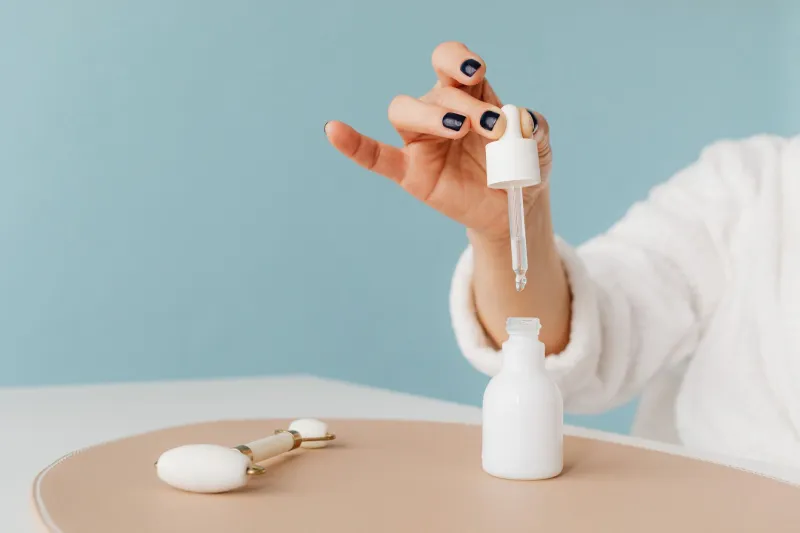
The modern bathroom, particularly after a warm shower, creates conditions that are genuinely favorable for skincare application. Steam elevates ambient humidity, which softens the outermost layer of the stratum corneum and temporarily increases skin's permeability. In practical terms, this means that serums and moisturizers applied in a post-shower bathroom environment may penetrate more readily than those applied to dry, room-temperature skin elsewhere in the home.
Dermatologists have long referenced the principle of applying products to slightly damp skin for precisely this reason — moisture in the environment supports moisture in the skin, creating a more receptive surface for active ingredients. Hyaluronic acid, for instance, functions as a humectant by drawing moisture from its surroundings. In a humid bathroom, it has ample atmospheric moisture to attract. In a dry bedroom during a heated winter night, it may draw from the skin itself, paradoxically contributing to tightness rather than plumpness.
This is not a minor distinction. For those investing in premium hyaluronic acid serums or peptide-rich treatments, the application environment may meaningfully influence the return on that investment.
The Bedroom: Where Dryness and Dimness Conspire
The bedroom presents a more complex picture. For many Americans, it is the room where evening skincare rituals unfold — the nightly application of retinoids, overnight masks, facial oils, and rich moisturizers. Yet the bedroom is frequently the least hospitable environment for skincare application.
Central heating systems, particularly prevalent across the northern United States during fall and winter, reduce indoor relative humidity to levels that rival arid desert conditions. The American Academy of Dermatology has noted that indoor heating can drop humidity to between 10 and 20 percent — far below the 40 to 60 percent range considered optimal for skin comfort and barrier function. Applying an occlusive night cream under these conditions may help seal in what little moisture exists, but it cannot compensate for a fundamentally dehydrating atmosphere.
The solution, for those committed to maximizing their evening regimen's efficacy, is a quality bedroom humidifier. It is, in many respects, an unsexy addition to a luxury skincare wardrobe — but it may prove more transformative than the next prestige serum on the wishlist.
Then there is the matter of light. Bedroom lighting — warm-toned, low-wattage, often positioned at unflattering angles — is notoriously poor for assessing skin. The glow that appears elusive in the evening mirror is frequently present and simply invisible under inadequate light. This creates a psychological feedback loop in which consumers perceive their products as underperforming, adjust their routines unnecessarily, or layer additional products in pursuit of results that were, in fact, already there.
The Role of Temperature in Product Performance
Beyond humidity, temperature itself influences both the skin and the formulations applied to it. Warmer environments dilate blood vessels near the skin's surface, lending a natural flush and luminosity that cooler rooms suppress. This is part of why a post-shower complexion so frequently appears more radiant — the warmth has brought circulation to the surface, creating that coveted inner-glow effect.
Temperature also affects product viscosity and spreadability. A facial oil applied in a cool bedroom will feel thicker and may sit on the skin's surface longer before absorbing. That same oil, warmed between the palms and pressed into skin that has been gently steamed, will behave like an entirely different product. For those who have dismissed a particular oil or balm as "too heavy," it is worth considering whether temperature — rather than formulation — was the determining variable.
Lighting and the Perception of Radiance
The relationship between light and perceived skin quality deserves particular attention, because it speaks directly to one of the most common frustrations in luxury skincare: spending significantly on a routine and feeling uncertain whether it is actually working.
Natural daylight, particularly the diffused light of a north-facing window or an overcast morning, is the most accurate and flattering light source available. It reveals texture and tone with equal honesty, making it the gold standard for assessing genuine skin progress. Fluorescent bathroom lighting, common in American homes and apartments, can introduce a bluish cast that mutes warmth and makes the complexion appear flatter than it is. Warm incandescent or candlelight, while atmospheric, can obscure imperfections while also obscuring genuine luminosity.
For anyone serious about tracking their skin's response to a new regimen, the recommendation is consistent: assess results in the same light source, at the same time of day, and in the same room. The bathroom, for all its humidity-related virtues, is frequently the worst place to render a verdict on your skin — unless the lighting has been carefully considered.
Optimizing Your Ritual Across Every Room
The practical takeaway from this environmental analysis is not that skincare routines need to be entirely relocated, but that small, deliberate adjustments to each space can meaningfully amplify results.
In the bathroom, lean into the humidity advantage. Apply water-based serums and humectants immediately after cleansing, while steam is still present. Reserve richer occlusives for the final step, allowing the layers beneath to absorb before sealing.
In the bedroom, invest in a humidifier — particularly during the heating season — and consider applying overnight treatments to slightly damp skin, misted lightly with a hydrating facial spray if necessary. Evaluate your evening products in morning daylight rather than judging them by how your skin feels at midnight.
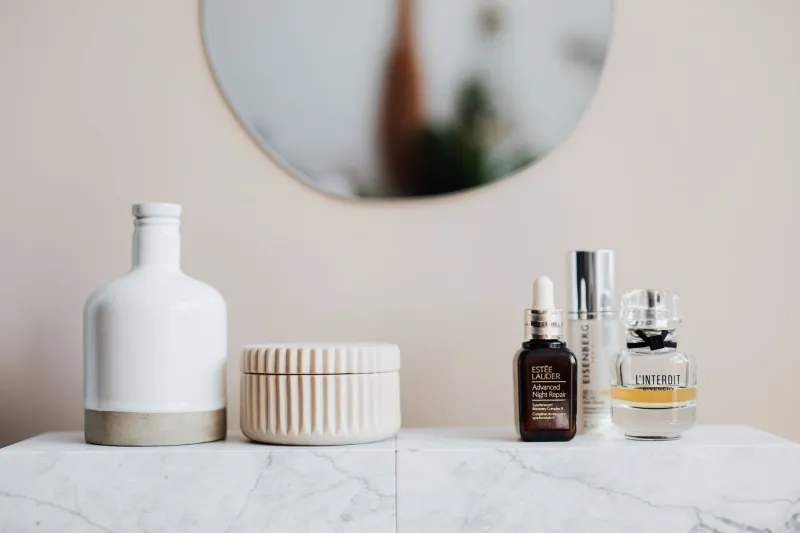
For those with dedicated vanity spaces or dressing rooms, natural light and a stable, moderate temperature make these rooms ideal for both application and assessment. If a daylight-mimicking mirror or bulb is an option, it is one of the more underrated tools in a discerning beauty enthusiast's arsenal.
The Invisible Variable in Every Routine
Luxury skincare is, at its finest, a precise and considered practice. The formulations that populate the shelves of Glisten Beauty's most admired brands are developed with extraordinary care — but they are developed in controlled laboratory conditions, not in the variable microclimates of American homes. Bridging that gap requires a degree of environmental awareness that the industry rarely discusses openly.
Radiance, ultimately, is not only a product of what you apply. It is a product of where, when, and under what conditions you apply it. The most luminous skin belongs not to those with access to the most expensive formulations, but to those who have learned to treat the environment itself as part of the ritual.