Living Skin: How the Microbiome Movement Is Rewriting the Rules of Luxury Skincare
For the better part of a century, the beauty industry operated on a foundational assumption: clean skin meant sterile skin. Cleansers boasted antimicrobial properties. Toners promised to eliminate every trace of bacteria. Premium formulations competed on their ability to purify, sanitize, and sterilize — and consumers paid handsomely for the privilege of feeling scrubbed clean.
Science, as it often does, has complicated that story considerably.
Researchers now understand that the human skin hosts a vast and intricate ecosystem — approximately one trillion microorganisms per square centimeter, comprising bacteria, fungi, viruses, and archaea — collectively referred to as the skin microbiome. Far from being a liability, this microscopic community performs functions that no laboratory-synthesized ingredient has yet replicated: it regulates inflammation, fortifies the skin barrier, modulates immune response, and, critically, contributes to the kind of sustained, luminous radiance that no highlighter can authentically mimic.
The implications for luxury skincare are profound, and the industry's most forward-thinking brands are already responding.
The Biology of Balance
To appreciate why the microbiome matters, it helps to understand what happens when it is disrupted. Dermatologists refer to this disruption as dysbiosis — an imbalance in microbial populations that can manifest as increased sensitivity, persistent dullness, inflammatory conditions such as rosacea and eczema, and even accelerated signs of aging.
Dr. Whitney Bowe, a board-certified dermatologist and researcher whose work on the skin-gut-brain axis has garnered significant attention in clinical circles, has described the skin microbiome as "the skin's first line of defense." When that defense is compromised — by overly aggressive cleansers, high concentrations of alcohol-based toners, or the indiscriminate use of broad-spectrum antimicrobials — the consequences extend well beyond superficial irritation. Barrier function deteriorates. Transepidermal water loss increases. Opportunistic pathogens, no longer held in check by a balanced microbial community, gain a foothold.
The result is skin that looks and behaves as though it is perpetually under siege — reactive, uneven, and stripped of its natural luminosity.
From Antimicrobial to Microbiome-Friendly: A Formulation Shift
The reformulation movement now underway across the prestige beauty sector represents one of the most significant philosophical pivots in modern cosmetic chemistry. Where once a product's efficacy was measured by its capacity to eliminate, it is now increasingly evaluated by its capacity to preserve and support.
Prebiotic ingredients — compounds that selectively nourish beneficial bacterial strains — have become a cornerstone of this new formulation language. Inulin, derived from chicory root, and beta-glucan, extracted from oats and certain yeasts, are among the most clinically substantiated options, appearing with growing frequency in the ingredient decks of premium serums and moisturizers. These compounds function not by introducing new microorganisms, but by creating the precise environmental conditions under which the skin's existing beneficial flora can thrive.
Probiotic-infused formulations occupy an adjacent space, though their application in topical skincare is more nuanced. Because living bacterial cultures present significant stability challenges in cosmetic formulations, many brands have pivoted toward postbiotics — the bioactive byproducts of bacterial fermentation, including short-chain fatty acids, peptides, and enzymes — which deliver the biological benefits of a healthy microbiome without the formulation complexities of live cultures.
Lactobacillus ferment, a postbiotic derived from lactic acid bacteria, exemplifies this approach. Its capacity to reinforce the skin barrier and reduce inflammatory signaling has made it a favored ingredient among dermatologist-developed luxury lines navigating the intersection of clinical efficacy and sensorial elegance.
The Luxury Brands Leading the Biological Renaissance
Among the prestige houses that have most deliberately oriented themselves around microbiome science, a few names surface with particular consistency in clinical and editorial conversations alike.
Mother Dirt, while positioned at an accessible price point, was among the earliest brands to introduce live ammonia-oxidizing bacteria into topical formulations — a move that prompted considerable scientific debate and, ultimately, broader industry curiosity. Their work laid groundwork that more premium players have since built upon.
At the luxury tier, brands such as Gallinée have constructed their entire product philosophy around microbiome science, formulating with a proprietary lactic acid, prebiotic, and probiotic complex designed to shift skin pH toward the mildly acidic range — approximately 4.5 to 5.5 — that beneficial bacteria prefer. This attention to pH is not incidental; the skin's acid mantle, long recognized as a barrier component, is now understood to be as much a microbial management system as a chemical one.
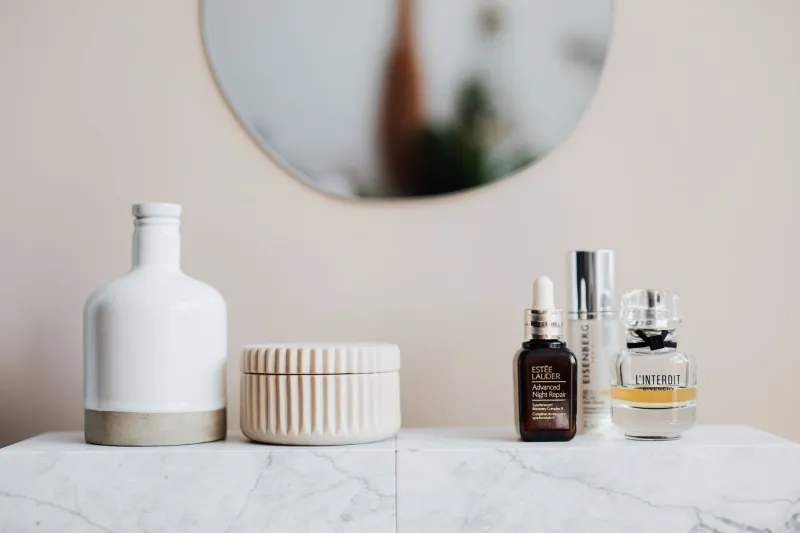
Estée Lauder's research division has invested significantly in microbiome mapping studies, examining how the microbial composition of radiant, youthful skin differs from that of aged or compromised complexions. Those findings are beginning to surface in product development pipelines, with targeted prebiotic and ferment-forward formulations appearing across the Lauder portfolio.
Rethinking the Cleanse
Perhaps nowhere is the microbiome revolution more practically consequential than in the cleansing step — historically the most aggressively antimicrobial stage of any skincare ritual.
Dermatologists are now counseling patients to reconsider the surfactant profiles of their cleansers with the same scrutiny they might apply to active ingredients. Sodium lauryl sulfate and related aggressive surfactants, long prized for their ability to produce a satisfying lather and thorough removal of sebum, are now understood to significantly disrupt microbial populations and compromise barrier lipids — precisely the conditions that precipitate post-cleanse tightness and the cycle of over-moisturizing that follows.
The emerging preference among skin-focused dermatologists is for low-surfactant or surfactant-free cleansing formats: micellar waters, cleansing balms, and oil-based emulsifiers that remove environmental impurities without disturbing the microbial community or stripping the skin's natural lipid matrix. Several luxury brands have responded with cleansers that carry certifications for microbiome compatibility — a designation that, while not yet standardized across the industry, signals a meaningful commitment to this new biological paradigm.
Radiance as a Biological State
What is perhaps most compelling about the microbiome conversation — and most aligned with the philosophy of genuinely luminous skin — is its implication that true radiance is not a cosmetic achievement but a biological one.
Skin that glows with authentic vitality is skin whose internal ecosystem is in equilibrium: a balanced microbiome supporting a robust barrier, regulating inflammation, and maintaining the hydration gradients that give the complexion its characteristic suppleness and reflectivity. No highlighter, however finely milled, replicates this quality. No serum, however elaborately priced, can substitute for it.
The luxury skincare consumer who invests in microbiome-supportive formulations is, in a very real sense, investing in the foundational biology of their own radiance — choosing to work with the skin's intelligence rather than against it.
In this light, the microbiome revolution is not merely a scientific trend or a marketing pivot. It is a long-overdue reckoning with what the skin has always been: not a surface to be conquered, but a living system to be honored.