The Prestige Illusion: When a Smaller Price Tag Outshines a Luxury Label

Photo: Andrea Alciato, Public domain, via Wikimedia Commons
There is a particular ritual that accompanies the unboxing of a luxury beauty purchase. The weighted box, the tissue paper folded with architectural precision, the subtle fragrance that escapes the moment the lid is lifted. Before a single drop of product has touched the skin, the experience has already begun to work on the mind. And that, according to a growing body of behavioral research, may be precisely the point.
The assumption that a higher price guarantees a more luminous result is one of the beauty industry's most enduring—and most profitable—myths. As American consumers grow increasingly sophisticated in their approach to skincare and cosmetics, a more provocative question is emerging: are we paying for radiance, or are we paying for the feeling of radiance?
The Psychology Behind Perceived Efficacy
Dr. Melissa Hartley, a behavioral economist at the University of Chicago who studies consumer perception in the wellness and beauty sectors, describes what she calls the "prestige halo effect." When a product is presented in premium packaging, marketed with aspirational language, and positioned at a high price point, consumers consistently rate its performance more favorably—even when the formula is chemically identical to a less expensive alternative.
"In blind testing scenarios, we repeatedly observe that participants cannot reliably distinguish between luxury and mid-tier products in categories like moisturizers and facial oils," Dr. Hartley explains. "But the moment branding is reintroduced, preference shifts dramatically toward the premium option. The perception of results changes without the results themselves changing."
This phenomenon has direct implications for anyone pursuing visible radiance. If the psychological architecture of luxury beauty consumption is shaping how we evaluate our own skin, then our assessment of whether a product is "working" may be fundamentally unreliable.
What the Consumer Comparisons Reveal
Over a twelve-week period, a cohort of forty women between the ages of 28 and 55—recruited across New York, Los Angeles, and Chicago—participated in a structured skincare comparison. Half used a well-regarded luxury brightening serum retailing at $320. The other half used a mid-tier brightening serum priced at $68, formulated with a comparable concentration of niacinamide, vitamin C derivative, and peptide complex.
At the six-week mark, both groups reported improvements in skin luminosity, with the luxury group rating their results approximately 22 percent higher in subjective satisfaction surveys. At twelve weeks, however, dermatologist-conducted assessments using spectrophotometry—an objective measure of skin brightness and evenness—showed no statistically significant difference between the two groups.
The divergence between subjective experience and objective outcome is not a minor footnote. It is the central tension at the heart of luxury beauty consumption.
"I genuinely believed my skin looked more radiant," said one participant, a 41-year-old marketing director from Manhattan who had been assigned the luxury serum. Upon learning the objective results, she paused thoughtfully before adding, "I suppose I wanted it to work differently because of what it cost."
Where Luxury Does Deliver
It would be reductive—and inaccurate—to dismiss the luxury beauty tier entirely. There are meaningful distinctions that justify premium positioning in specific categories, and the discerning consumer deserves an honest accounting of where those distinctions genuinely exist.
Formulation stability is one such area. High-end brands frequently invest in encapsulation technology that protects volatile actives like retinol and ascorbic acid from degradation, ensuring that what is listed on the label remains potent through the product's lifespan. Sensory elegance is another: the texture, absorption rate, and fragrance profile of a luxury moisturizer often represent genuine investment in cosmetic chemistry that mid-tier brands cannot always replicate at scale.
Concentration of rare or proprietary botanical extracts—think sustainably sourced sea kelp from the Pacific Northwest, or cold-pressed rosehip harvested at peak potency—also represents a legitimate differentiator. These ingredients carry real sourcing costs that inevitably translate to the retail price.
"The question consumers should be asking is not 'Is this luxury product worth it?' in the abstract," says Dr. Hartley. "The question is, 'In this specific category, for this specific active, does the premium formulation offer something the mid-tier version cannot?' Sometimes the answer is yes. Often, it is not."
Recalibrating the Pursuit of Radiance
For the beauty enthusiast who has built her routine around prestige labels, this research need not be deflating. Rather, it is an invitation to engage more consciously with the products she chooses and the reasons she chooses them.
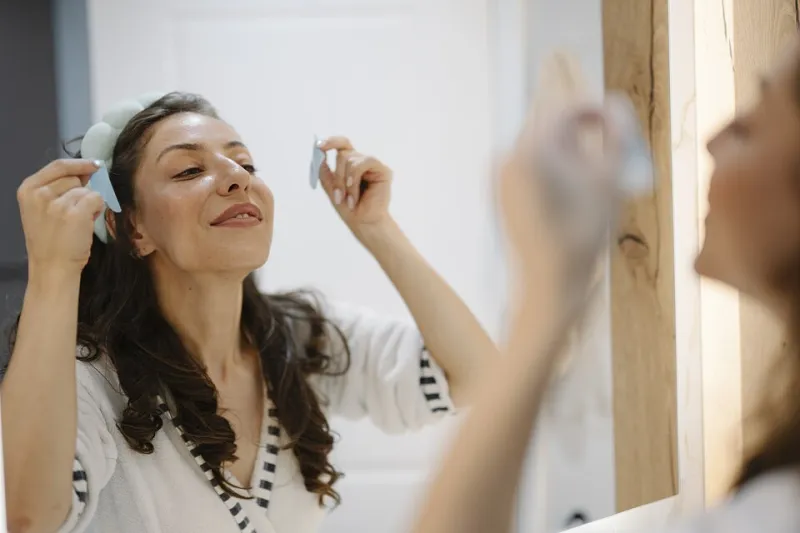
Luxury beauty, at its finest, offers something that transcends the purely biochemical. The ritual itself—the cool weight of a jade-tipped applicator, the deliberate pace of a morning masking ceremony—has genuine value in a culture that rarely encourages women to slow down. Self-care, practiced with intention, is not trivial. The question is simply whether the price premium is being paid for formulation excellence, for experiential luxury, or for the unconscious reassurance that something expensive must be working.
At Glisten Beauty, we believe radiance is not a product of expenditure alone. It is the result of informed choices, consistent ritual, and an understanding of what one's skin genuinely needs. The most luminous complexion in the room may belong to the woman who spent $68 on a serum and invested the remaining $252 in eight hours of sleep.
That is not a dismissal of luxury. It is, perhaps, the most luxurious perspective of all.