While You Sleep: How Premium Beauty Brands Are Harnessing Chronobiology for Overnight Radiance
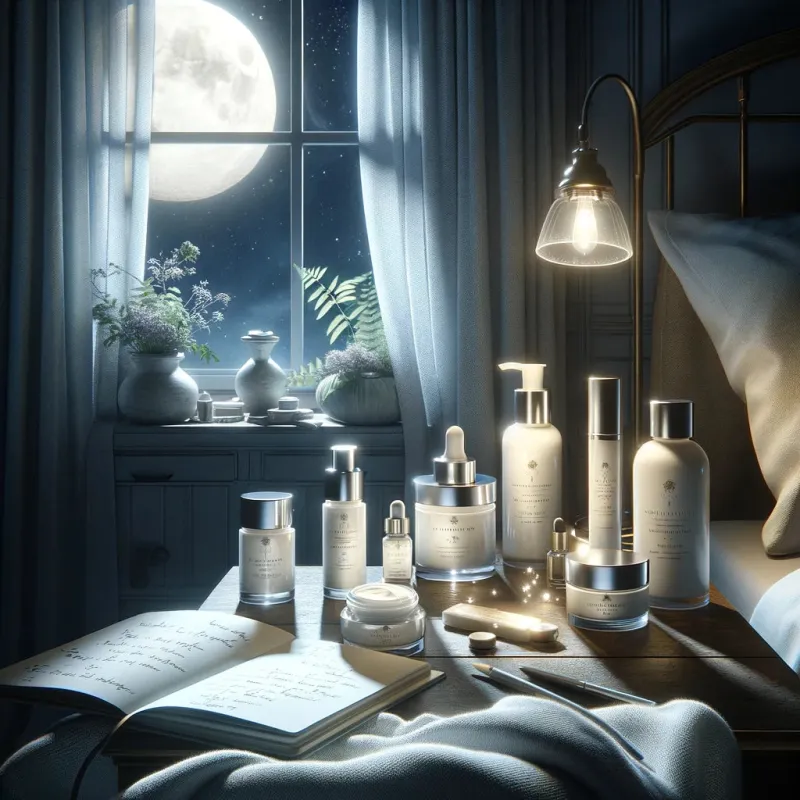
Photo: luxury nighttime skincare routine with serum and moisturizer on bedside table with soft candlelight, via maskad.co
Long before the beauty industry attached a price tag to the concept, your grandmother likely offered some version of the same counsel: get your rest, and your skin will show it. What she could not have articulated — though she was entirely correct — was the intricate biochemical choreography that unfolds across the body's largest organ during the sleeping hours. Today, a new generation of luxury beauty brands is not simply nodding to that wisdom. They are building entire product philosophies around it.
The science in question is chronobiology: the study of biological rhythms and the ways in which time itself governs cellular behavior. Applied to skincare, it represents one of the most compelling frontiers in prestige beauty — and one that is beginning to yield formulations of genuine sophistication.
The Skin's Internal Clock
Every cell in the human body operates according to a circadian rhythm, a roughly 24-hour biological cycle governed by the master clock in the brain's suprachiasmatic nucleus and reinforced by peripheral clocks in individual tissues. Skin cells are no exception. In fact, the skin's circadian clock is among the most well-documented in peripheral biology, with profound implications for how the complexion ages, repairs, and radiates.
During daylight hours, the skin is oriented toward defense. Antioxidant activity peaks in the morning, preparing the complexion to contend with UV exposure, pollution, and oxidative stress. Cell proliferation — the process by which the skin generates new cells — is deliberately suppressed during waking hours. The skin, in its biological wisdom, does not attempt major reconstruction while it is under environmental assault.
Night shifts the equation entirely. As melatonin levels rise and the body enters its restorative phase, the skin pivots from defense to repair. Cell turnover accelerates. Human growth hormone, released in significant quantities during deep sleep, stimulates collagen synthesis and tissue regeneration. Transepidermal water loss increases slightly, signaling that the barrier is in a more permeable, receptive state. Blood flow to the skin deepens, delivering the oxygen and nutrients that fuel overnight renewal.
This is not metaphor. It is measurable, replicable biology — and it has become the intellectual foundation for a new category of luxury nighttime skincare.
From Laboratory to Nightstand: The Chronobiology-Informed Brand
The translation of circadian research into commercial formulation is still relatively young, but several prestige houses have moved with notable intention.
Estée Lauder's Advanced Night Repair, one of the best-selling luxury serums in American beauty history, was built decades ago on the premise of nighttime cellular repair — a positioning that has aged remarkably well as the underlying science has grown more sophisticated. The brand has continued to evolve the formulation in alignment with emerging chronobiological research, incorporating ingredients designed to synchronize with the skin's natural repair rhythms rather than simply layer actives onto them.
More recent entrants have been even more explicit in their scientific framing. Clinique's Smart Night line, along with offerings from NARS, Sisley Paris, and the Swiss biotech brand Cellcosmet, each incorporate language around circadian synchronization and nocturnal cellular activity. The underlying formulation philosophy, where it is genuine rather than merely cosmetic, centers on delivering ingredients at the moment of maximum biological receptivity — when the skin is most actively seeking the raw materials for renewal.
Retinoids remain the gold standard of nighttime actives, and their alignment with circadian biology is instructive. Vitamin A derivatives accelerate cell turnover, stimulate collagen production, and address pigmentation — all processes that the skin is already primed to undertake during sleep. Using retinol at night is not simply a matter of photosensitivity avoidance; it is, biochemically speaking, working in concert with the skin's own nocturnal agenda.
Sleep Quality as a Skincare Variable
For all the innovation in nighttime formulations, chronobiologists and dermatologists are consistent on one point: no topical product can fully compensate for chronically disrupted sleep. The architecture of overnight skin repair depends not just on the passage of time, but on the depth and quality of the sleep itself.
Deep sleep — specifically the slow-wave stages that dominate the first half of the night — is when growth hormone secretion peaks and cellular repair is most intensive. REM sleep, which predominates in the second half, is associated with stress hormone regulation, including cortisol modulation. Elevated cortisol, the physiological signature of both stress and sleep deprivation, directly degrades collagen, impairs barrier function, and increases inflammatory activity in the skin. The research here is unambiguous: poor sleep is a skin aging accelerant.
This positions sleep hygiene not as a wellness lifestyle affectation but as a legitimate component of a serious skincare regimen. For the luxury beauty consumer who invests thoughtfully in premium formulations, failing to address the quality of the biological environment in which those formulations operate represents a significant gap in the overall strategy.
Constructing the Optimal Nighttime Ritual
A chronobiology-informed evening ritual is less about the number of products applied and more about the sequence, timing, and intentionality of each step. The following framework reflects both the science and the sensibility that define elevated self-care.
Wind down with intention, beginning before the mirror. The skin's circadian clock is sensitive to light exposure. Blue light from screens suppresses melatonin production and effectively signals to the body — and the skin — that it is still daytime. Dimming overhead lighting and stepping away from devices at least 30 to 60 minutes before sleep is not merely calming; it is a biological primer for the skin's overnight repair sequence.
Cleanse thoroughly but gently. The evening cleanse removes the accumulated oxidative burden of the day — sunscreen, pollution particulates, and the byproducts of daytime sebum oxidation. A second cleanse, or a dedicated oil-based first step, ensures that nighttime actives are applied to truly clean skin capable of optimal absorption.
Apply actives at peak receptivity. Retinoids, peptides, and growth factor serums are best applied immediately after cleansing, when the skin's permeability is at its evening high. Allow each layer adequate time to absorb before proceeding.
Seal with a substantive overnight moisturizer. The slight increase in transepidermal water loss that characterizes nighttime skin creates both an opportunity and a vulnerability. A rich, occlusive moisturizer — ideally one containing ceramides, squalane, or a peptide complex — supports barrier function while creating the hydrated environment in which cellular repair proceeds most efficiently. Several luxury brands now offer dedicated overnight masks designed precisely for this purpose, including Tatcha's Overnight Memory Serum Concentrate and SK-II's Facial Treatment Mask.
Protect the investment with sleep hygiene. A cool room temperature (between 65 and 68 degrees Fahrenheit is widely cited as optimal for sleep quality), a silk pillowcase to minimize mechanical friction and moisture absorption, and consistent sleep and wake times to reinforce circadian regularity are each, in their own way, acts of skincare.
Radiance as a Circadian Achievement
The emerging conversation around chronobiology and luxury beauty is, at its core, a reframing of what radiance actually means. It is not a surface phenomenon applied from the outside, though the right formulations undeniably support it. It is a systemic achievement — the visible expression of a body and a skin that are sleeping deeply, repairing efficiently, and cycling through their biological rhythms with integrity.
For the discerning consumer who has long understood that true luminosity cannot be purchased in a single bottle, this science offers something more satisfying than any product launch: a framework. A way of understanding the skin not as a passive surface to be treated, but as a dynamic, time-sensitive biological system that rewards those attentive enough to work with it rather than simply at it.
The most radiant mornings, it turns out, are built in the dark.