The New Language of Luxury Beauty: Adaptogens, Functional Botanicals, and the Brands Bridging the Gap Between Skincare and Wellness
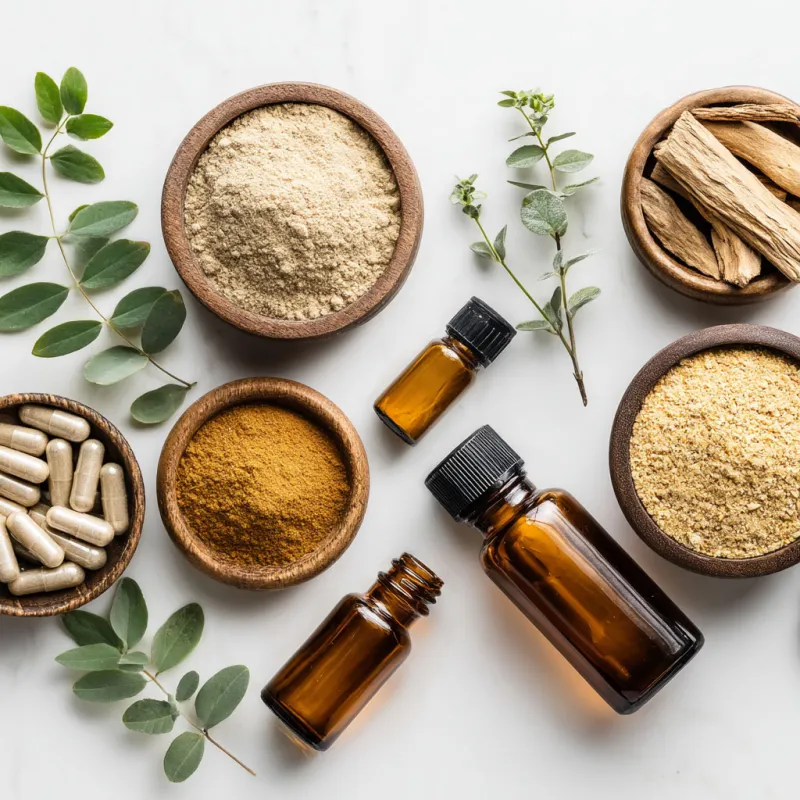
Photo: luxury adaptogen wellness beauty supplements flatlay botanical ingredients elegant, via pagnutrition.com
For decades, the American beauty industry operated on a reasonably clear premise: skincare lived in the bathroom, wellness lived in the kitchen, and the two rarely had occasion to meet. That division, once accepted as self-evident, is now dissolving — not through trend alone, but through a genuine shift in how a growing segment of consumers understands the relationship between internal health and external appearance.
At the forefront of this shift are luxury beauty and wellness brands that have moved beyond the surface-level promises of conventional cosmetics to offer something more holistic, more considered, and — their devotees would argue — more genuinely transformative. The vocabulary they speak is one of adaptogens, probiotics, nootropic botanicals, and bioavailable nutrients. And for the discerning American consumer, it is becoming increasingly fluent.
Understanding the Adaptogen Moment
Adaptogens are not new. These plant-derived compounds — which include ashwagandha, rhodiola, reishi mushroom, holy basil, and schisandra berry, among others — have been central to Ayurvedic and Traditional Chinese Medicine for centuries. What is new is their migration into the luxury beauty space, where they are appearing not only in supplements and wellness elixirs but in topical serums, facial oils, and even color cosmetics.
The defining characteristic of an adaptogen is its purported ability to help the body modulate its response to stress — whether physical, emotional, or environmental. This is particularly relevant to skin health, given that chronic psychological stress has been clinically linked to elevated cortisol levels, which in turn compromise the skin barrier, accelerate collagen degradation, and trigger inflammatory responses that manifest as dullness, breakouts, and accelerated aging.
Brands operating at the intersection of luxury and wellness have been quick to recognize this connection. Moon Juice, a Los Angeles-based brand that began as a cold-pressed juice company, has evolved into one of the most sophisticated purveyors of adaptogenic beauty supplements in the country. Its Magnesi-Om and SuperBeauty products blend bioavailable minerals and adaptogenic botanicals with a level of formulation rigor that positions them firmly in the premium wellness category. The brand's aesthetic — clean, considered, and deeply Californian — has helped normalize the concept of beauty supplements among consumers who might once have confined their supplement regimens to basic multivitamins.
The Probiotic Frontier
If adaptogens represent one pillar of this emerging category, the microbiome — and the probiotics and prebiotics that support it — represents another. The gut-skin axis, a term that has migrated from gastroenterology journals into mainstream beauty discourse, describes the bidirectional relationship between the digestive microbiome and skin health. Emerging research suggests that disruptions in gut flora may contribute to inflammatory skin conditions including acne, rosacea, and eczema, and that supporting microbial diversity through diet and supplementation may have meaningful cutaneous benefits.
Luxury brands have translated this science into products that feel as elevated as any traditional skincare offering. Tula, which built its identity around probiotic-infused topicals, has attracted a devoted following among consumers who prioritize clean, science-backed formulations. At a higher price point, brands such as Esse and Gallinée have developed sophisticated probiotic ecosystems that address the skin microbiome both topically and — through companion supplement lines — from within.
The appeal to luxury consumers is not merely scientific. It is philosophical. There is something deeply aligned with the values of a discerning, wellness-oriented American consumer in the idea that beauty is not applied but cultivated — that the glow one seeks is a byproduct of a body in genuine equilibrium.
Ingestible Beauty: From Novelty to Necessity
The ingestible beauty category — encompassing collagen peptides, biotin formulations, hyaluronic acid supplements, and antioxidant-rich beauty powders — has undergone a significant maturation in recent years. What was once regarded with skepticism by dermatologists and nutritionists alike is now the subject of an expanding body of clinical literature.
Hydrolyzed collagen peptides, in particular, have accumulated a meaningful evidence base. Multiple randomized controlled trials have demonstrated statistically significant improvements in skin elasticity, hydration, and the appearance of fine lines following consistent supplementation. This has emboldened luxury brands to invest in this space with the same formulation seriousness they apply to their topical lines.
Vital Proteins, acquired by Nestlé Health Science in 2021, brought collagen supplementation into mainstream American households, but the luxury end of the spectrum has since differentiated itself through sourcing transparency, bioavailability optimization, and the integration of complementary botanicals. Brands such as The Beauty Chef — an Australian import with a devoted US following — and HigherDOSE have developed ingestible ranges that are as carefully considered aesthetically as they are scientifically, understanding that the luxury consumer's purchasing decision is influenced by the full sensory experience of a product.
Performance Botanicals and the Question of Efficacy
Beyond adaptogens and probiotics, a broader category of performance-driven botanicals is finding its way into premium beauty formulations — ingredients selected not for their marketing appeal but for their documented bioactivity. Sea buckthorn, bakuchiol, centella asiatica, and turmeric-derived curcumin are among the plant compounds that have transitioned from niche wellness circles to the ingredient decks of serious luxury skincare brands.
Bakuchiol deserves particular attention. Derived from the seeds of the Psoralea corylifolia plant and used historically in Ayurvedic practice, it has been validated in clinical settings as a functional alternative to retinol — stimulating collagen production and accelerating cellular turnover without the photosensitivity or irritation that retinoids can provoke. Its inclusion in formulations from brands such as Herbivore Botanicals and Alpyn Beauty signals a broader willingness among luxury consumers to embrace plant-derived actives that were once dismissed as less potent than their synthetic counterparts.
The Consumer Driving This Evolution
Who, precisely, is purchasing a $120 adaptogenic beauty elixir or a $85 probiotic supplement designed to support skin clarity? The profile that emerges from market research is consistent: she is typically between 30 and 55, college-educated, health-conscious, and accustomed to viewing her wellbeing as a holistic system rather than a series of isolated concerns. She reads ingredient labels with the same attention she applies to nutritional panels. She is deeply skeptical of unsubstantiated claims and equally willing to invest substantially when she believes the evidence supports doing so.
She is, in many ways, the ideal Glisten Beauty reader — someone who understands that true radiance is not manufactured but cultivated, and who is prepared to engage with the full complexity of what that cultivation requires.
A New Definition of Luxury
Perhaps the most significant implication of this movement is what it suggests about luxury itself. For a new generation of premium beauty consumers, luxury is no longer defined primarily by heritage, packaging, or price. It is defined by intelligence — the intelligence of a formulation, the transparency of a brand's sourcing practices, and the integrity of the science underlying its claims.
Brands that understand this are not merely selling products. They are offering a philosophy: that beauty and wellness are not parallel tracks but a single, continuous practice. That the most refined expression of self-care is one that honors the body as an integrated system. And that genuine radiance — the kind that no filter can replicate — begins not at the surface, but from within.