Sixty Minutes That Outperform Six Months: The Case for Professional Facials Over a Stocked Skincare Shelf
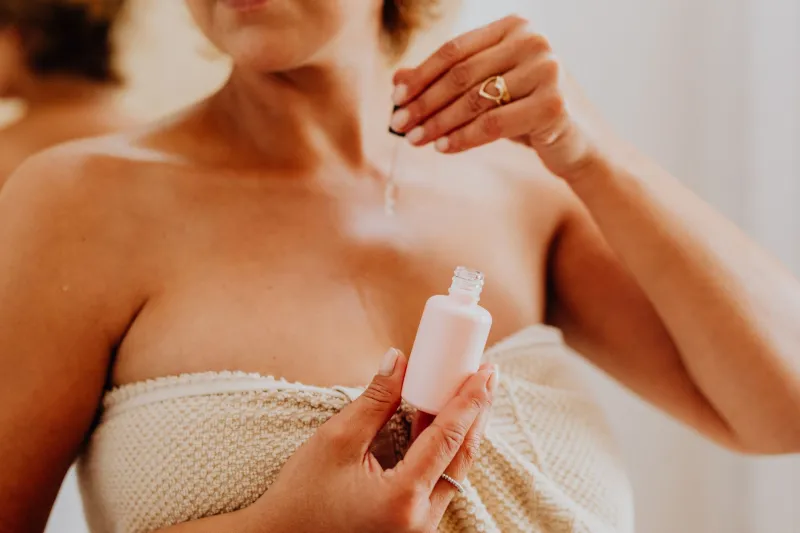
There is a particular kind of confidence that arrives after assembling what feels like the definitive skincare collection—a vitamin C serum that cost more than a dinner for two, a retinoid formulated by a Nobel Prize-adjacent chemist, a moisturizer whose ingredient list reads like a botanical encyclopedia. The ritual is real. The investment is substantial. And yet, for a significant number of devoted skincare consumers, one professional facial manages to accomplish in a single appointment what months of diligent home care could not.
This is not coincidence. It is science—and understanding the gap between what a licensed professional achieves and what a luxury retail product can deliver may fundamentally change how you allocate your beauty budget.
The Penetration Problem No Serum Can Solve
At the heart of this disparity lies a biological reality that cosmetic brands are not legally permitted to overcome: the skin barrier. The outermost layer of the epidermis, the stratum corneum, is architecturally designed to keep foreign substances out. It performs this function with impressive efficiency, which is precisely why the majority of active ingredients in even the most prestigious over-the-counter formulations never reach the dermal layers where meaningful, lasting change actually occurs.
Federal regulations enforced by the FDA draw a firm line between cosmetics and drugs. Any product classified as a cosmetic—which includes virtually every serum, oil, and cream sold at retail—cannot legally claim to alter the structure or function of the skin. This regulatory boundary is not merely semantic. It shapes formulation decisions at the molecular level, limiting the concentration and delivery mechanisms that brands can deploy.
Professional treatments operate in an entirely different category. Chemical peels administered in a clinical setting use acid concentrations that would be prohibited in a retail context. Microdermabrasion and dermaplaning mechanically remove the outermost cellular layer, creating a temporarily permeable surface that allows subsequent topical applications to penetrate with dramatically greater efficiency. Microneedling—increasingly offered in both dermatology offices and licensed esthetics studios—creates controlled microchannels in the skin that bypass the barrier entirely, delivering actives to depths that no consumer product approaches.
What Trained Hands Know That a Bottle Cannot Tell You
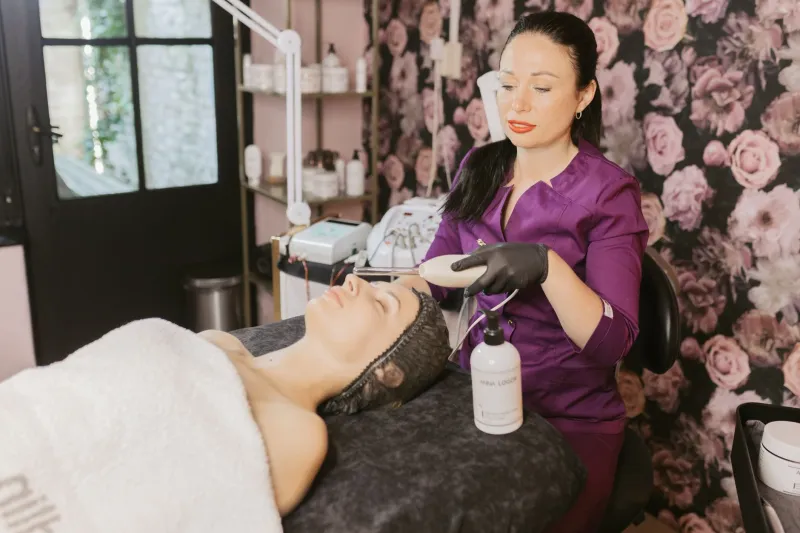
Beyond the chemistry, there is the matter of expertise. A skilled esthetician performs a diagnostic assessment before a single product is applied—examining pore architecture, hydration levels, sebum distribution, sensitivity thresholds, and the behavioral history of your skin under stress, seasonal shifts, and hormonal fluctuation. This assessment informs every subsequent decision: which exfoliant to select, how long to leave a mask, whether to introduce steam or forgo it entirely.
No algorithm on a beauty retailer's website, however sophisticated, replicates this process. Personalized skincare quizzes and AI-driven product recommendations operate on self-reported data filtered through consumer perception—a notoriously unreliable instrument. The professional, by contrast, reads the skin directly.
Dermatologists extend this advantage further still. In a medical setting, prescription-strength retinoids, hydroquinone formulations, and procedural interventions such as laser resurfacing and radiofrequency tightening are available—each operating at a physiological depth and efficacy level that the luxury retail market cannot legally or practically match.
The Technology Divide
Consider the hardware differential. High-frequency devices used in professional settings generate an electrical current that simultaneously stimulates circulation, accelerates cellular turnover, and creates an inhospitable environment for acne-causing bacteria. LED light therapy panels deployed in clinical and esthetic settings emit calibrated wavelengths—red light for collagen stimulation, blue light for bacterial suppression—at intensities that consumer-grade at-home devices rarely achieve. Ultrasound-based treatments drive active ingredients through the epidermis using sound wave frequencies that no topical application can emulate.
The at-home beauty technology market has expanded considerably, and several devices marketed to consumers do produce measurable results. But the gap between a $300 home LED mask and a professional panel treatment remains significant—in both the intensity of the light delivered and the trained eye interpreting the skin's response throughout the session.
The ROI Calculation Worth Having
For the discerning consumer accustomed to investing in quality, the financial comparison deserves honest scrutiny. A comprehensive luxury skincare routine—cleanser, toner, essence, serum, eye cream, moisturizer, SPF—assembled from prestige brands can easily represent a monthly expenditure of $400 to $800 or more, with replenishment costs that compound over a year into figures that rival a modest vacation.
A professional facial from a licensed esthetician at a reputable spa or skin clinic in most major American cities ranges from $150 to $350 per session. A dermatologist-administered treatment such as a medium-depth chemical peel or a photofacial typically falls between $300 and $700. On a quarterly schedule—four sessions annually—the annual investment in professional care ranges from approximately $600 to $2,800 depending on the modality selected.
The question is not whether one approach is categorically superior to the other. A well-formulated daily SPF, a gentle cleanser, and a prescription retinoid remain foundational to long-term skin health and cannot be replaced by periodic professional visits alone. The more productive question is whether the incremental dollars spent on the fifth serum or the second eye cream would generate a greater visible return if redirected toward a professional treatment.
For many consumers, the honest answer is yes.
A More Intelligent Approach to Radiance
The most luminous complexions rarely belong to those with the most crowded vanity shelves. They tend, instead, to reflect a more considered strategy—one that pairs a streamlined, high-quality daily regimen with the periodic intervention of professional expertise and technology.
This is not an argument against luxury skincare. The ritual of a well-formulated serum applied with intention, the sensory pleasure of a richly textured moisturizer, the psychological comfort of a consistent evening routine—these elements of self-care carry genuine value that a quarterly facial appointment cannot fully replace. Radiance, after all, is cultivated daily as much as it is achieved in a treatment room.
But if visible, lasting results are the primary objective—if the goal is genuine skin transformation rather than the accumulation of beautiful packaging—then the professional treatment room deserves a seat at the table of your beauty investment strategy. The esthetician's hands, the dermatologist's clinical precision, and the technology that neither a serum nor a cream can replicate may well represent the most refined expression of what luxury skincare truly promises: not merely the appearance of care, but its measurable, luminous reality.