Drinking Your Way to Radiance: The Science and Luxury of Ingestible Beauty
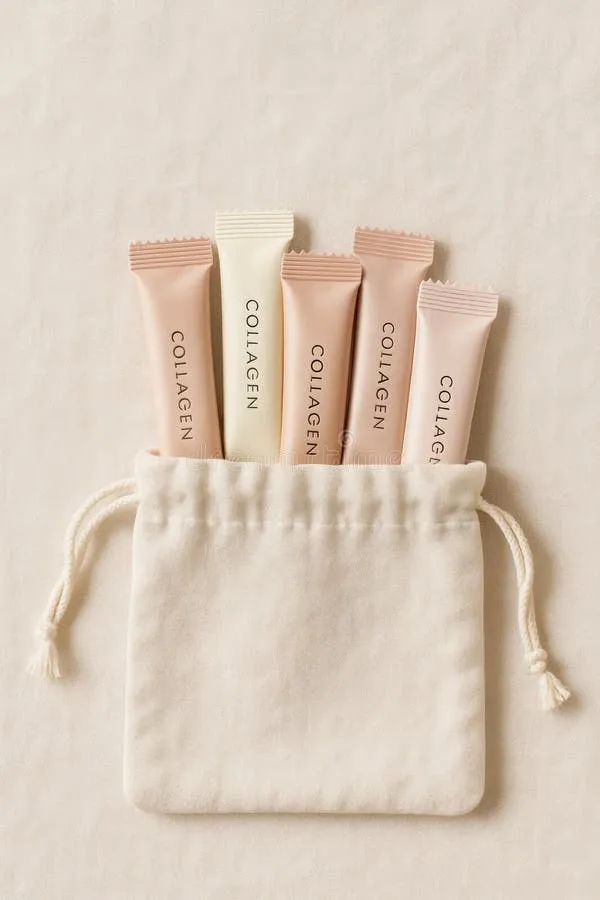
Photo: luxury beauty supplements collagen powder elegant lifestyle flatlay, via thumbs.dreamstime.com
For generations, the pursuit of luminous skin began and ended at the bathroom shelf. Cleansers, serums, and moisturizers formed the architecture of every serious skincare regimen, and the idea that beauty could be meaningfully influenced from within was largely relegated to wellness folklore. That paradigm is shifting—decisively and expensively.
The global ingestible beauty market is projected to surpass $9 billion by 2028, according to industry analysts, and luxury brands are positioning themselves at the vanguard of this movement with formulations that command prices rivaling their topical counterparts. But beyond the elegant packaging and sophisticated marketing language, a genuine scientific conversation is underway. Dermatologists, nutritional biochemists, and cosmetic researchers are revisiting long-held assumptions about bioavailability, systemic skin support, and the true limits of topical application.
The Case for Going Inward
The skin is the body's largest organ, and like every organ, its health is intimately tied to what we consume. This is not a radical idea—nutritional dermatology has existed as a field for decades. What is new is the precision with which supplement manufacturers are now targeting skin-specific biological pathways.
Topical skincare, however sophisticated, operates within defined constraints. The skin's outermost barrier—the stratum corneum—is designed to keep things out. Many active ingredients, including larger peptide molecules, struggle to penetrate deeply enough to stimulate the dermal processes that produce meaningful, lasting change. Ingestibles, by contrast, enter the bloodstream and reach the dermis through circulation, bypassing this barrier entirely.
"There are certain things that topical products simply cannot do as efficiently," explains a board-certified dermatologist practicing in New York City. "When we're talking about supporting fibroblast activity or sustaining hyaluronic acid synthesis over time, the systemic route has real merit—provided the formulation is bioavailable and the dosage is clinically relevant."
Collagen Peptides: The Crown Jewel of the Category
No ingredient has done more to legitimize the ingestible beauty category than hydrolyzed collagen peptides. Unlike intact collagen molecules—which are too large to be absorbed meaningfully—hydrolyzed collagen is enzymatically broken down into short-chain amino acid sequences that the body can absorb efficiently through the gastrointestinal tract.
Multiple randomized, double-blind, placebo-controlled trials have demonstrated statistically significant improvements in skin elasticity, hydration, and the appearance of fine lines following consistent collagen peptide supplementation. A widely cited 2019 review published in the Journal of Drugs in Dermatology analyzed eleven such studies and found that oral collagen supplementation showed measurable benefits for skin aging across the board.
The mechanism is twofold: the amino acids from digested collagen serve as raw material for the body's own collagen synthesis, while certain bioactive peptides appear to directly stimulate fibroblasts—the cells responsible for producing structural proteins in the dermis.
Luxury brands have responded to this research with formulations of notable sophistication. Vital Proteins' Collagen Peptides, long a staple of the wellness community, has been joined by more elevated offerings. Moon Juice's Collagen Protect and Golde's beauty-focused blends have elevated the category aesthetically and nutritionally, while European heritage brands like NEOM Organics have introduced collagen complexes with complementary botanical support.
Marine Bioactives and the Next Wave
Beyond bovine collagen, the category is expanding into marine-derived ingredients with compelling profiles. Marine collagen—sourced primarily from fish skin and scales—is considered by many researchers to offer superior bioavailability compared to its bovine equivalent, owing to its smaller peptide size and structural similarity to human Type I collagen, the predominant form in skin.
Marine bioactives extend further into the realm of polysaccharides, omega fatty acids, and astaxanthin—a carotenoid antioxidant found in certain algae and marine organisms that has demonstrated remarkable capacity for neutralizing oxidative stress, a primary driver of premature skin aging. Premium brands such as Skinade, the British luxury collagen drink, have built their entire proposition around marine-sourced ingredients delivered in a liquid format optimized for absorption.
Astaxanthin in particular is attracting significant scientific interest. Studies suggest it may be among the most potent naturally occurring antioxidants identified to date, with the ability to quench singlet oxygen—a particularly damaging reactive species—at rates far exceeding vitamin C or vitamin E.
Micronutrient Precision: Beyond the Multivitamin
The most sophisticated ingestible beauty formulations go beyond singular hero ingredients to address the full nutritional ecosystem that supports skin health. Zinc, selenium, silica, biotin, and vitamins A, C, and E each play documented roles in skin integrity, barrier function, and cellular turnover.
What distinguishes luxury offerings in this space is not merely ingredient selection but the attention paid to form and bioavailability. Zinc picolinate, for instance, is considerably more absorbable than zinc oxide. Methylated B vitamins are better utilized by individuals with common genetic variants affecting methylation pathways. Liposomal vitamin C delivers the nutrient in a phospholipid shell that dramatically improves cellular uptake compared to standard ascorbic acid.
Brands such as HUM Nutrition, Reserveage, and the increasingly prominent Ritual have built their reputations on this kind of formulation intelligence, offering targeted beauty supplements that prioritize efficacy over marketing spectacle.
What Consumers Should Realistically Expect
For all its promise, the ingestible beauty category demands measured expectations. Results are cumulative and gradual—most clinical studies measure outcomes at eight to twelve weeks of consistent daily use. This is not a category suited to the consumer seeking immediate transformation.
Dosage matters enormously. Many products on the market contain collagen quantities well below the 2.5 to 10 grams per day range shown to be effective in clinical literature. Discerning consumers should examine supplement facts panels with the same scrutiny they apply to a topical ingredient list.
Additionally, ingestibles work most powerfully as a complement to, not a replacement for, a well-constructed topical regimen and foundational lifestyle practices—adequate hydration, sun protection, quality sleep, and a nutrient-dense diet.
The Luxury Proposition
What justifies the premium price points in this category? At its best, the luxury ingestible beauty market offers superior sourcing, third-party testing for purity and potency, clinically validated ingredient forms, and formulation complexity that genuinely exceeds mass-market alternatives. For the informed consumer, these distinctions are meaningful.
The glow-from-within economy is not a passing trend. It represents a maturation of the beauty conversation—one that acknowledges the skin as a living, metabolically active organ that responds to what we feed it. For those willing to invest thoughtfully and patiently, the rewards may well be written on the face.