What the Camera Cannot Capture: The Truth About Real Radiance and the Influencer Illusion

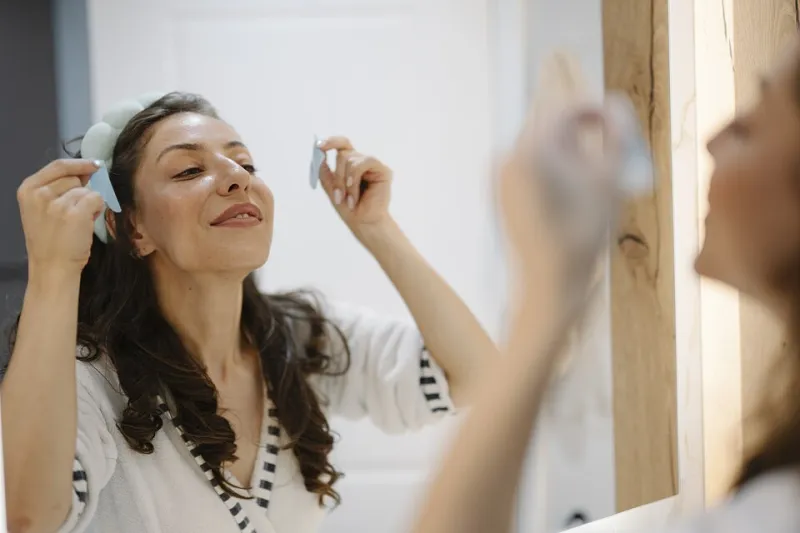
Photo: Shixart1985, CC BY 2.0, via Wikimedia Commons
Scroll through any luxury beauty influencer's feed on a given Tuesday morning and you will encounter something close to visual perfection: skin that appears lit from within, pores rendered invisible, and a dewy luminosity that seems simultaneously effortless and aspirational. It is, by most measures, a compelling portrait of what premium skincare promises to deliver.
But spend five minutes with one of those same influencers in a naturally lit room — no ring light, no VSCO filter, no strategically angled camera — and the experience can be quietly revelatory. The skin is still beautiful, often genuinely so. But it is also unmistakably human. And the glow, when it exists, is something altogether different from what the algorithm has been serving you.
This is the paradox at the heart of modern luxury beauty culture: the products designed to create the most breathtaking real-world radiance do not always photograph the way consumers have been trained to expect. Conversely, some of the most visually arresting digital complexions are engineered almost entirely for the lens — and offer relatively little to the skin beneath.
How Cameras and Skin Speak Different Languages
To understand the disconnect, it helps to appreciate the fundamental difference between how the human eye and a camera sensor interpret light reflecting off skin.
"The eye processes luminosity with extraordinary nuance," explains Dr. Renata Solís, a board-certified dermatologist practicing in Manhattan. "It reads depth, translucency, and the subtle variation in tone that signals genuine skin health. A camera — particularly a smartphone camera — tends to flatten that information and reward contrast, shimmer, and surface reflection instead."
This distinction has significant implications for how skincare products are formulated and how they are marketed. A serum enriched with ceramides, peptides, and long-chain fatty acids may spend months quietly rebuilding the skin's lipid barrier, producing a kind of softly luminous texture that reads as radiant in person but registers as almost matte on camera. Meanwhile, a product loaded with finely milled mica, silicones, and light-diffusing particles will photograph spectacularly — delivering the kind of glossy, almost editorial sheen that performs brilliantly under a ring light but may do comparatively little for the skin's long-term integrity.
"There is an entire category of products I think of as 'camera-first' formulations," says Los Angeles-based makeup artist Dominique Ferrell, whose client roster spans major film productions and luxury brand campaigns. "They are not fraudulent, exactly. They do what they claim to do. But what they claim to do is look extraordinary in photographs. Whether they make skin healthier over time is a separate conversation."
The Architecture of a Photogenic Complexion
The mechanics behind a camera-ready glow are, at this point, fairly well understood within the industry. Silicone-based primers fill the microscopic texture of the skin's surface, creating the smooth, pore-minimized canvas that photographs as flawless. Highlighters containing synthetic mica or synthetic fluorphlogopite — a lab-created alternative — deposit metallic shimmer particles that catch light in a way that reads as luminosity on a sensor. Certain setting sprays contain glycerin concentrations calibrated not for hydration but for the dewy, glass-like surface finish they produce in the immediate moment after application.
None of this is inherently problematic. But it becomes complicated when consumers — many of whom are investing seriously in luxury skincare precisely because they want genuine, lasting radiance — begin to conflate the photogenic ideal with the real-world result.
"I see patients regularly who come in frustrated," says Dr. Solís. "They have been purchasing high-end products faithfully for months. Their skin barrier has genuinely improved. Their dermatologist is pleased with their progress. But they feel like their skin doesn't 'glow' the way it does in the content they follow online. That expectation has been shaped by something that was never meant to represent unmediated skin."
What Genuine Radiance Actually Looks Like
Ask a dermatologist to describe truly healthy, radiant skin and the language shifts considerably from the vocabulary of social media. The words that surface most frequently are translucency, evenness, and what Dr. Solís calls "light behavior" — the way well-nourished skin with an intact barrier reflects ambient light from slightly beneath the surface rather than sharply off of it.
"Healthy skin has a quality of depth," she says. "It is not flat and shiny. It is luminous in the way that a fine pearl is luminous — you sense that the light is coming from within rather than bouncing off a surface."
This kind of radiance is the product of consistent, unglamorous work: adequate hydration, a fortified lipid barrier, managed inflammation, and the patient accumulation of ingredients like niacinamide, vitamin C, and retinoids that improve cellular turnover and melanin distribution over time. It does not appear overnight. It does not photograph with the same immediacy as a highlighter-laced primer applied thirty seconds before a shoot. But it is, by nearly every clinical and aesthetic measure, the superior result.
"When I encounter a client who has genuinely great skin — not great makeup, not great lighting, but great skin — it is unmistakable in person," says Ferrell. "There is a quality to it that I have never been able to fully replicate with product. And ironically, that skin is often harder to photograph well than skin that has been dressed up for the camera."
The Luxury Industry's Reckoning
Some of the most respected names in prestige skincare appear to be grappling with this tension in ways that are beginning to surface in their product development and marketing strategies. An increasing number of luxury brands are quietly de-emphasizing the immediate visual payoff in favor of clinical language around barrier function, microbiome health, and long-term luminosity — language that is harder to illustrate with a before-and-after photograph but more honest about what sophisticated skincare actually accomplishes.
The shift is also visible in how certain high-end brands are choosing to present their products in editorial contexts: natural light over studio strobes, minimal retouching, and a deliberate embrace of what the industry has taken to calling "real skin" — texture, subtle variation, and all.
Whether this represents a genuine philosophical realignment or a savvy repositioning in response to consumer fatigue with filtered perfection remains an open question. But for discerning consumers who have always understood that the most meaningful investments in their skin are the ones that compound quietly over years rather than dazzle in a single photograph, the direction of travel is a welcome one.
Recalibrating Your Definition of Glow
The most practical takeaway from this conversation may be a simple one: the next time you assess the performance of a luxury skincare product, consider putting your phone down.
Step into natural light. Look at your skin without the mediation of a filter, a camera algorithm, or a carefully positioned ring light. Ask not whether your complexion photographs well, but whether it feels resilient, even, and genuinely alive. Those qualities — the ones that no camera has yet learned to fully honor — are the truest measure of what premium skincare, at its best, is designed to deliver.
True radiance, it turns out, has always been something you feel before you see it. The camera, for all its seductive clarity, has simply never been equipped to tell that particular story.