The Case for Real Skin: How the Beauty World Fell Back in Love With Texture

Photo: Shivani Shetty, CC BY-SA 4.0, via Wikimedia Commons
Not long ago, the aspirational complexion was essentially a fiction. Filters, ring lights, and a layered architecture of primers, setting sprays, and high-coverage foundations conspired to produce a face that read as luminous on screen but bore little resemblance to living skin. Pores were erased. Fine lines were smoothed into nonexistence. The result was a kind of radiance that glowed like polished resin—beautiful in a photograph, and entirely artificial in practice.
That aesthetic is losing its grip on American beauty culture. In its place, something more honest—and, paradoxically, more difficult to achieve—is taking hold.
The Backlash Against Manufactured Perfection
The shift did not happen overnight, nor did it emerge from a single cultural moment. It accumulated gradually, driven by a generation of younger consumers who grew up watching their own faces filtered into unreality and eventually found the experience alienating rather than aspirational. Gen Z, in particular, has demonstrated a pronounced preference for authenticity in beauty representation—a preference that is now exerting measurable pressure on luxury brands accustomed to projecting an idealized standard.
Dermatologists began to notice the change in their consultation rooms. Patients who once arrived requesting treatments to minimize every visible pore were increasingly asking a different kind of question: how do I make my skin look healthy and alive, rather than perfect and static?
"There is a clinical distinction between luminosity and what I would call biological vitality," explains Dr. Priya Anand, a board-certified dermatologist practicing in San Francisco. "Skin that is genuinely healthy has texture. It has subtle variation in tone. It moves and reflects light in a way that no amount of high-coverage foundation can fully replicate. My patients are beginning to understand that, and they are choosing to work with their skin rather than against it."
What 'Lit From Within' Actually Means
The phrase "lit from within" has become something of a beauty industry cliché, deployed so frequently across product marketing that it risks losing meaning entirely. But the concept it gestures toward is rooted in genuine dermatological science—and understanding it is essential to pursuing radiance that reads as authentic rather than applied.
Skin luminosity, at its most fundamental, is a function of how efficiently the skin's surface reflects and refracts light. Healthy skin with an intact moisture barrier, adequate ceramide content, and optimal cellular turnover possesses a natural translucency. Light does not simply bounce off the surface; it enters the uppermost layers of the epidermis and scatters in a way that creates depth and warmth. This is the glow that no highlighter fully replicates.
Conversely, skin that is dehydrated, compromised by environmental stressors, or burdened by product buildup tends to absorb and scatter light unevenly, producing the flat, dull appearance that sends many Americans reaching for an additional layer of luminizing product—which, in a frustrating irony, can further occlude the natural radiance they are attempting to restore.
"The most common mistake I see is people layering brightening products over skin that simply needs hydration and a simplified routine," Dr. Anand notes. "You cannot highlight your way to a healthy glow. The foundation has to be biological."
How Luxury Brands Are Recalibrating
The premium beauty sector, always sensitive to the direction of cultural conversation, has begun to respond—though not always with the conviction the moment demands. Some established luxury houses have updated their campaign imagery to feature more textural realism, presenting models with visible pores and natural skin movement rather than the porcelain-smooth complexions that characterized an earlier era of prestige advertising.
Others have gone further, reformulating hero products to prioritize skin health as a prerequisite for radiance. The emphasis has shifted from immediate optical brightening—achieved through light-diffusing silicones and reflective pigments—toward longer-term investments in barrier function, hydration depth, and microbiome balance. These are not glamorous selling points. They do not photograph as dramatically as a sweep of iridescent highlighter. But they are, increasingly, what discerning consumers are seeking.
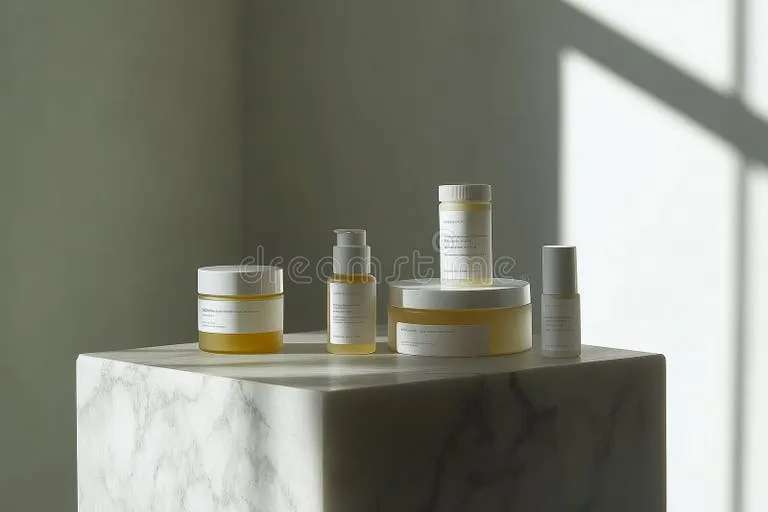
A handful of premium independent brands have built their entire identity around this philosophy. Products that lead with ceramides, fermented postbiotics, and skin-identical lipids are finding receptive audiences among consumers who have grown weary of the short-term theater of traditional luminizing cosmetics.
The Products Worth Considering
For those navigating this recalibration, the product categories most aligned with authentic radiance are perhaps less exciting than a gilded highlighter palette—but considerably more transformative in practice.
Barrier-repair moisturizers featuring a ceramide-to-fatty-acid ratio that mirrors the skin's own lipid profile represent a meaningful investment for anyone whose skin appears dull or uneven. Gentle exfoliating treatments—particularly those combining a low-concentration polyhydroxy acid with a humectant base—support the cellular turnover that underlies genuine luminosity without compromising the barrier integrity that makes that luminosity visible.
For those who desire a subtle enhancement, the newer generation of skin tints and tinted serums—formulated to provide sheerness rather than coverage—allow natural texture to remain visible while evening the complexion. These are products designed to work with the skin's character rather than obscure it.
The luxury segment has produced genuinely excellent offerings in each of these categories. The key, as always, is to select based on formulation rather than prestige alone.
Redefining the Standard of Radiance
At its core, the movement toward authentic skin texture is not a rejection of beauty or luxury. It is a more sophisticated understanding of what beauty, at its most compelling, actually looks like. A complexion that glows with genuine health—that reflects light because the skin beneath it is nourished, balanced, and cared for—is more arresting than any amount of optical illusion applied over the surface.
This is the standard that Glisten Beauty has always championed: radiance that is refined because it is real, luminosity that is earned through intelligent self-care rather than borrowed from a bottle. The return of texture is not a step backward. It is, for those willing to look closely, a more honest and ultimately more beautiful way forward.