Prestige Pricing Under the Microscope: What You're Really Paying For in Luxury Beauty

Photo: Andrea Alciato, Public domain, via Wikimedia Commons
There is a certain ritual comfort in reaching for a beautifully weighted jar, its surface cool to the touch, its fragrance precisely calibrated to signal indulgence. For millions of American beauty consumers, that experience alone may justify the expenditure. But as the luxury skincare market surpasses $20 billion in annual US sales, a more pointed question has emerged in both dermatology clinics and online forums alike: does the premium price point actually deliver premium results for your skin?
The answer, according to a growing body of independent research and a chorus of cosmetic chemists willing to speak candidly, is complicated — and occasionally uncomfortable.
The Anatomy of a Luxury Price Tag
To understand what you are purchasing when you invest in a $300 serum versus a $45 alternative, it helps to understand how beauty brands construct their retail pricing. Industry insiders routinely cite a formula in which the cost of goods — the actual formulation, packaging, and manufacturing — represents as little as ten to twenty percent of the final retail price. The remaining margin funds marketing campaigns, retail partnerships, celebrity endorsements, and the considerable overhead of maintaining a prestige brand identity.
"The active ingredients in a high-end vitamin C serum and a mid-market equivalent are frequently sourced from the same handful of suppliers," explains one independent cosmetic chemist who consults for both prestige and mass-market brands. "What differs is concentration, stabilization technology, and the delivery system — and those differences do matter. But they rarely account for a tenfold price difference."
This does not render luxury beauty fraudulent. It does, however, reframe the conversation around what consumers are actually purchasing.
What Blind Testing Reveals
In 2023, a widely circulated independent consumer study conducted by a third-party testing organization evaluated moisturizers across price tiers — from drugstore staples to department store icons — measuring hydration retention, barrier function improvement, and visible radiance enhancement over eight weeks. The results were striking in their inconsistency: several products priced below $60 outperformed counterparts costing four times as much on objective hydration metrics, while a subset of luxury formulations demonstrated genuinely superior performance in skin barrier restoration.
The takeaway was not that luxury beauty is a fiction. Rather, it suggested that the correlation between price and performance is far from linear. Certain premium formulations do earn their positioning through proprietary peptide complexes, encapsulated retinoids, or cold-processed botanical extracts that genuinely enhance bioavailability. Others, frankly, do not.
"The prestige market is not monolithic," notes a board-certified dermatologist practicing in New York City. "I have patients who are getting extraordinary results from $400 moisturizers, and I have patients who are getting equivalent results from products they find at their local pharmacy. The variable is rarely price — it is formulation intelligence and consistent application."
Where Luxury Genuinely Earns Its Premium
Fairness demands acknowledging where the investment is demonstrably justified. Luxury beauty brands frequently allocate significantly more to research and development than their accessible counterparts, funding clinical trials, proprietary extraction methods, and ingredient stability research that genuinely advances the science of radiance.
Ingredient sourcing is another legitimate differentiator. A prestige brand sourcing cold-pressed rosehip oil from a single certified organic estate in Chile is working with a materially different raw ingredient than a brand using commodity-grade alternatives. The sensory elegance of a well-formulated luxury product — its texture, its absorption profile, its scent architecture — also reflects genuine craft and significant investment in formulation expertise.
There is, too, the matter of concentration. Luxury formulations frequently deliver active ingredients at clinically meaningful percentages, whereas accessible alternatives may include the same ingredient at a fraction of the dose — technically present on the label, functionally negligible in the formula.
The Packaging Paradox
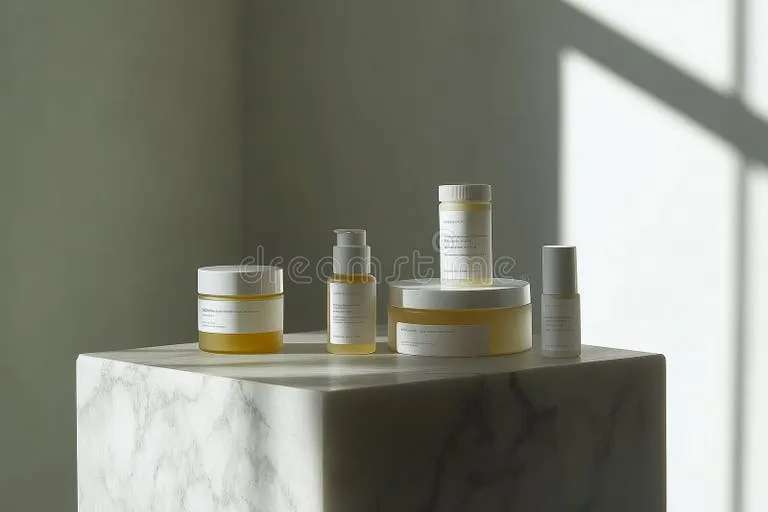
One of the most revealing conversations in modern beauty concerns packaging — specifically, the degree to which consumers are paying for it. A frosted glass jar with a weighted magnetic closure communicates luxury fluently and commands a psychological premium that is entirely real in its effect on consumer perception. Whether it enhances the product inside is a separate matter entirely.
In fact, certain packaging choices actively compromise formulation integrity. Jar packaging, however beautiful, exposes active ingredients like retinol and vitamin C to repeated air and light exposure with every use, accelerating oxidation and degrading efficacy. Pump dispensers and opaque airless bottles — often associated with less glamorous packaging aesthetics — frequently preserve active ingredient potency more effectively.
The savviest luxury beauty consumers are beginning to ask harder questions at the point of purchase: not merely how the product looks on a vanity, but how the packaging architecture serves the formula within.
A Framework for the Discerning Consumer
None of this is to suggest that the pursuit of luxury beauty is misguided. For the consumer who values the full sensory ritual — the texture, the scent, the aesthetic pleasure of a beautifully designed product — the premium is a legitimate personal expenditure. Glisten Beauty has long held that radiance is as much about how a ritual makes you feel as what it delivers biochemically.
What this investigation does suggest is that discernment, rather than brand loyalty alone, is the most valuable tool in any luxury beauty consumer's arsenal. Seeking out brands that publish clinical trial data, that specify active ingredient concentrations, and that invest demonstrably in formulation science rather than marketing spectacle is a meaningful way to ensure that your investment in radiance is genuinely that — an investment, rather than an aspiration.
The glow you deserve is real. Whether every product on the market can deliver it at the price it charges is a question worth asking — and, increasingly, one the industry must answer.