The Foundation of Radiance: Why Your Most Affordable Product May Be Your Most Powerful One
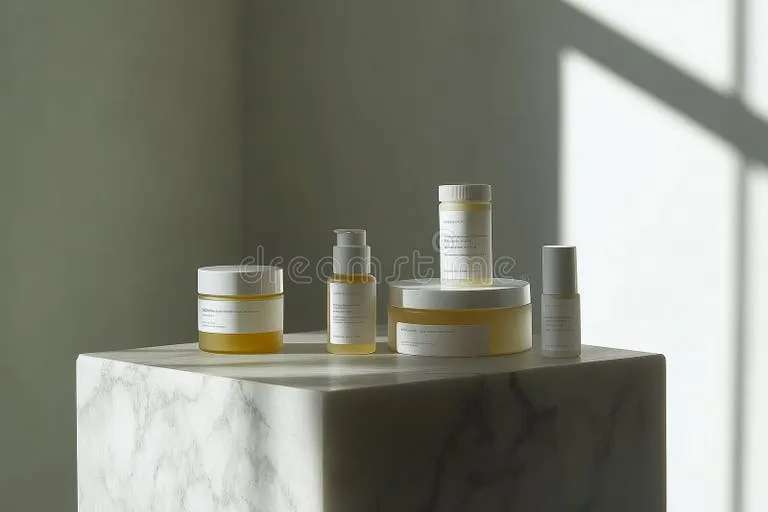
There is a particular ritual familiar to anyone who has walked the polished floors of a Sephora, a Neiman Marcus beauty counter, or the curated aisles of a luxury department store. A beautifully appointed bottle is placed in your hands. An elegantly dressed consultant speaks of peptide complexes, rare botanical extracts, and clinically validated luminosity. You leave having spent, perhaps, three hundred dollars — or more — on a serum that promises to rewrite the story of your skin.
And yet, if dermatologists were to be candid — and increasingly, they are — the most transformative product in your bathroom cabinet may well be the one you purchased at a drugstore for under thirty dollars.
This is not a dismissal of luxury skincare. It is, rather, an invitation to examine one of the beauty industry's most persistent and quietly damaging myths: that the most expensive product in your routine is necessarily the most effective one.
The Serum Paradox
The modern luxury serum has become something of a cultural artifact. It signals sophistication, self-investment, and a certain fluency in the language of prestige beauty. Brands have invested enormously in positioning these products — through heritage storytelling, cutting-edge packaging, and ingredient narratives that blur the line between skincare and science fiction.
The ingredients themselves are often genuinely remarkable. Stabilized vitamin C at meaningful concentrations, retinoids derived from advanced encapsulation technologies, growth factors, and niacinamide formulations refined over years of research — these are not empty promises. Many luxury serums do deliver measurable benefits under the right conditions.
The critical phrase, however, is under the right conditions.
A vitamin C serum — even a flawlessly formulated one — that is applied beneath inadequate sun protection is, in the estimation of many board-certified dermatologists, functionally undermined before the day has truly begun. The biochemical work it performs overnight or in the morning can be partially or wholly reversed by unfiltered ultraviolet exposure within hours of application.
What Ultraviolet Exposure Actually Does to Your Glow
To understand why sunscreen so consistently outperforms prestige serums in the architecture of radiance, it helps to understand what UV exposure actually does to the skin at a cellular level.
Ultraviolet A rays — the longer-wavelength rays that penetrate deeply and are present year-round, regardless of cloud cover or season — are among the primary drivers of what dermatologists term photoaging. This encompasses hyperpigmentation, the degradation of collagen and elastin, the suppression of the skin's natural antioxidant defenses, and the chronic low-grade inflammation that dulls the complexion over time.
Ultraviolet B rays, meanwhile, are responsible for the acute damage most consumers associate with sun exposure: redness, burning, and the kind of surface-level injury that accelerates uneven tone and textural irregularity.
Collectively, these two forces are responsible for an estimated eighty percent of visible facial aging, according to research published in dermatological literature. Eighty percent. That figure bears sitting with, particularly for consumers who have invested thousands of dollars in anti-aging serums while applying sunscreen inconsistently, or not at all.
No serum — regardless of its price point or the sophistication of its formulation — can meaningfully counteract ongoing, daily UV damage if that damage is being continuously replenished.
The Compounding Returns of Daily Protection
One of the more compelling arguments for repositioning sunscreen as the cornerstone of a luxury skincare philosophy is the concept of compounding returns.
A well-formulated broad-spectrum SPF 30 or 50 sunscreen, applied consistently every morning and reapplied midday when warranted, does not simply protect the skin on the day it is worn. It preserves the cumulative investments you have made in every other product in your routine. Your retinol's collagen-stimulating effects are not neutralized by afternoon sun. Your vitamin C's brightening work is not undone by an unprotected commute. Your hyaluronic acid serums are not fighting a losing battle against UV-induced moisture barrier disruption.
In this sense, sunscreen functions less like a single product and more like an insurance policy — one that allows every other element of your skincare portfolio to perform at its intended capacity.
Dermatologists frequently cite a landmark study conducted by the Queensland Institute of Medical Research in Australia, which followed participants over four and a half years and found that those who applied sunscreen daily showed no detectable increase in skin aging compared to those who used it at their own discretion. The daily sunscreen users did not merely slow their aging — they effectively halted measurable photoaging progression during the study period.
No serum in existence has produced data of comparable magnitude.
Rethinking the Luxury Skincare Hierarchy
None of this is to suggest that the discerning beauty consumer should abandon her investment in prestige serums, targeted treatments, or sophisticated moisturizers. The Glisten Beauty philosophy has always held that true luxury lies in understanding what your skin genuinely needs — and providing it with precision.
What it does suggest is that the hierarchy of luxury skincare spending deserves a thoughtful reexamination.
Consider the consumer who allocates three hundred dollars to a single brightening serum but reaches for a tinted moisturizer with SPF 15 — insufficiently protective by most dermatological standards — because she has not prioritized sunscreen in her budget. She is, in effect, pouring a fine wine into a cracked glass. The quality of the investment is undermined entirely by a structural flaw in the vessel meant to contain it.
Conversely, the consumer who selects a rigorously formulated, elegant broad-spectrum sunscreen — and there are genuinely beautiful options at every price point, from La Roche-Posay's beloved Anthelios range to EltaMD's UV Clear, both of which have earned near-universal dermatologist endorsement — and pairs it with even a mid-range vitamin C serum, is likely achieving superior results in the long arc of skin health and radiance.
The Intelligent Luxury Approach
Luxury, properly understood, is not synonymous with expense. It is synonymous with discernment — with the capacity to distinguish between what glitters and what genuinely transforms.
The most radiant skin is not always the skin that has been treated with the most expensive products. It is the skin that has been treated intelligently: protected daily, nourished thoughtfully, and supported by a routine built on evidence rather than aspiration.
For the consumer who is genuinely committed to luminosity — not the filtered, curated luminosity of a social media feed, but the deep, enduring glow that comes from skin operating at its healthiest — the prescription is perhaps simpler, and less glamorous, than the beauty industry would prefer to acknowledge.
Wear your sunscreen. Wear it every day. Reapply it. Choose a formulation you enjoy enough to use consistently, whether that is a lightweight fluid, a mineral-tinted option, or a hybrid moisturizer with meaningful UV protection built in.
And then, by all means, layer your serums, your essences, your targeted treatments. Let them work. Because with a well-applied broad-spectrum sunscreen beneath them, they finally have the conditions they need to deliver on their considerable promise.
The glow you have been seeking may not be waiting inside a three-hundred-dollar bottle. It may be waiting for you to protect what you already have.