Glowing Shelves, Dimming Confidence: The Surprising Truth About Luxury Skincare and Self-Perception
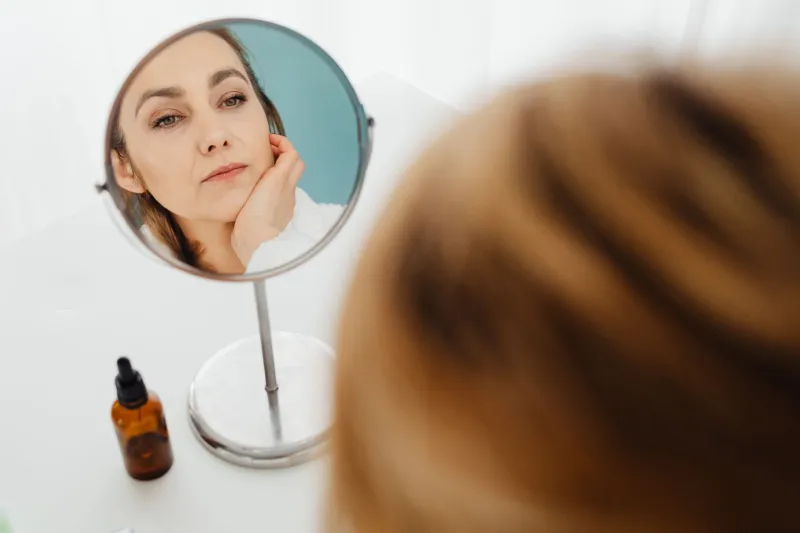
There is something quietly disquieting about standing before a vanity lined with elegantly packaged serums, toners, and treatment oils—products whose combined retail value could rival a week's vacation—and still finding the reflection wanting. Yet for a growing number of American consumers, this is precisely the experience that greets them each morning.
The prestige skincare market in the United States surpassed $22 billion in annual revenue in recent years, and projections suggest that figure will continue its upward trajectory well into the next decade. Sephora shelves are restocked with the kind of urgency once reserved for concert tickets. Waitlists form for moisturizers. And still, something essential appears to be missing.
The question worth asking—and one that psychologists, aestheticians, and dermatologists are increasingly raising—is not whether luxury skincare works. In many cases, it does. The more pressing question is why working products are failing to make people feel radiant.
The Confidence Gap No Serum Can Fill
Dr. Renée Holloway, a licensed clinical psychologist based in New York who specializes in body image and self-esteem, describes what she calls a "confidence displacement" phenomenon among her clients. "There is a widespread belief that the right product will be the final piece," she explains. "That once they find the correct formula, the insecurity will lift. But confidence is not a topical concern. It cannot be absorbed through the skin."
This observation is supported by consumer research conducted by several independent beauty analytics firms, which consistently finds that self-reported feelings of attractiveness do not rise proportionally with skincare spending. In fact, some surveys suggest an inverse relationship at higher spending thresholds—as if the act of searching more deliberately for a solution amplifies awareness of the perceived problem.
The psychological term for this is "attentional bias." When a person invests significantly in their skin, they begin to monitor it with far greater scrutiny. Every perceived imperfection becomes evidence of the product's insufficiency or, more damaging still, of their own skin's failure to respond appropriately.
Ingredient Anxiety and the Paralysis of Abundance
The modern luxury skincare consumer is, by necessity, something of an amateur biochemist. Retinoids, peptides, niacinamide, vitamin C derivatives, AHAs, BHAs—the vocabulary of the contemporary beauty aisle is dense, technical, and occasionally contradictory. Brands compete not merely on efficacy but on the sophistication of their ingredient storytelling, and consumers have absorbed this language fluently.
The unintended consequence is what aestheticians increasingly refer to as "ingredient anxiety"—a low-grade, persistent concern that one's current routine is either incomplete, incorrectly sequenced, or actively counterproductive. Social media has accelerated this significantly. A single viral post questioning the compatibility of two popular actives can send thousands of consumers into a reformulation spiral, discarding products before they have had adequate time to demonstrate results.
"I have clients who have never used the same cleanser for more than six weeks," notes celebrity aesthetician Margaux Delacroix, whose Los Angeles clientele spans entertainment and finance. "They are perpetually in the research phase. They never reach the results phase."
This restlessness is commercially advantageous for brands but psychologically costly for consumers. The sense of never quite having assembled the correct regimen becomes its own source of inadequacy.
The Comparison Economy
No examination of contemporary beauty psychology would be complete without acknowledging the profound role that digital comparison culture plays in undermining self-perception. Instagram, TikTok, and an ever-expanding constellation of beauty-adjacent platforms have created an environment in which the human face is perpetually measured against an idealized standard—one that is, in the majority of cases, either professionally lit, digitally altered, or both.
The irony is that luxury skincare brands themselves often participate in this dynamic, employing campaign imagery that is so far removed from attainable reality that it functions less as aspiration and more as alienation. When the "after" in an implied before-and-after scenario is a digitally smoothed complexion rendered under studio lighting, the consumer's actual skin—even genuinely improved skin—cannot compete.
Dr. Holloway observes that her clients frequently describe feeling "behind" their skincare routine rather than supported by it. "They see someone online whose skin appears luminous, and rather than feeling inspired, they feel inadequate. The product becomes associated with the gap between where they are and where they believe they should be."
Unrealistic Timelines and the Patience Deficit
Luxury beauty marketing has long trafficked in the language of transformation—words like "revolutionary," "instant," and "visible results in days" appear with remarkable frequency across premium product categories. The dermatological reality is considerably more measured. Meaningful cellular renewal operates on a cycle of approximately four to six weeks for younger skin, and considerably longer for mature complexions. Collagen synthesis, the mechanism underlying many of the most coveted anti-aging benefits, requires months of consistent application before it becomes perceptible.
The gap between marketing promise and biological reality creates a fertile environment for disappointment. When a $280 serum does not deliver the kind of visible transformation its campaign imagery implies within a reasonable consumer timeframe, the conclusion drawn is rarely that the expectation was unrealistic. More commonly, the consumer concludes that their skin is uniquely resistant, uniquely problematic, or uniquely undeserving of the promised results.
Board-certified dermatologist Dr. Sylvia Okafor, who practices in Chicago, is candid about the clinical implications. "I spend a significant portion of my consultations recalibrating expectations. The products are often excellent. The timelines people have been given are often not."
Reclaiming the Promise of Radiance
None of this is to suggest that luxury skincare lacks merit—it demonstrably does not. Premium formulations, when thoughtfully constructed and consistently applied, can meaningfully improve skin health, texture, hydration, and luminosity. The issue is not efficacy. The issue is the psychological architecture within which these products are being used.
Several forward-thinking brands are beginning to address this directly, incorporating what might be described as a "slow beauty" philosophy into their messaging—one that emphasizes ritual, consistency, and self-attunement over rapid transformation. The act of caring for one's skin, these brands argue, carries intrinsic value independent of measurable outcome. The warmth of a beautifully textured moisturizer, the quiet ceremony of a morning routine, the deliberate pause that skincare invites in an otherwise relentless day—these are not incidental pleasures. They are, for many practitioners, the primary ones.
This reframing carries genuine psychological weight. Research in behavioral psychology consistently demonstrates that the experience of engaged self-care—distinct from the outcome of self-care—correlates positively with self-regard and emotional wellbeing.
Perhaps the most honest thing the luxury beauty industry could offer its consumers is not a more potent active ingredient, but a more grounded relationship with the mirror. To glow, in the truest sense, has never required perfection. It has always required presence.
The shelves can remain full. The rituals can remain indulgent. But the confidence those rituals are meant to support must ultimately be cultivated from within—a truth that no formula, however refined, can substitute for.