The Price of Perfection: Why Luxury Skincare Spending Can Quietly Erode the Confidence It Promises to Build
There is a particular kind of hope that arrives with a new luxury skincare purchase. The weight of the glass bottle, the precision of the dropper, the quiet authority of a well-designed box — each detail signals that something transformative is about to begin. For millions of American consumers, this ritual represents not merely a purchase but a promise: that radiance, and with it, confidence, is finally within reach.
And yet, for a meaningful portion of those consumers, that promise goes unfulfilled in ways that no ingredient list can explain.
The Spending Spiral and Its Emotional Toll
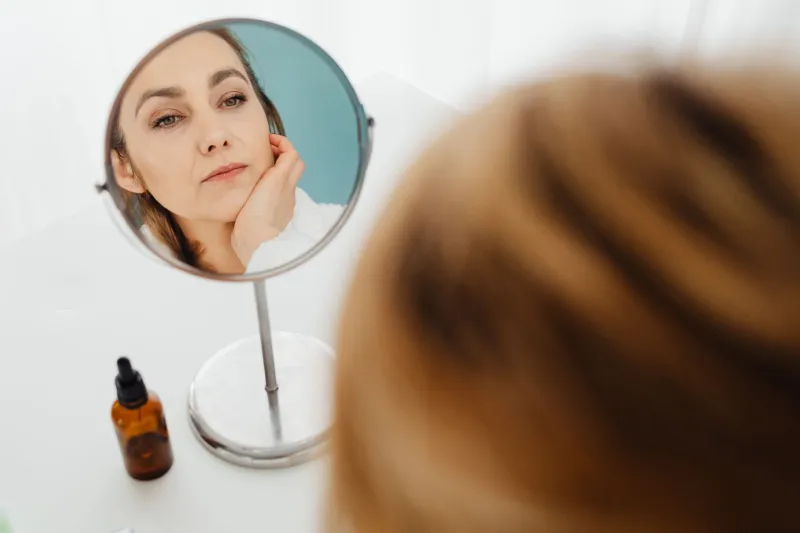
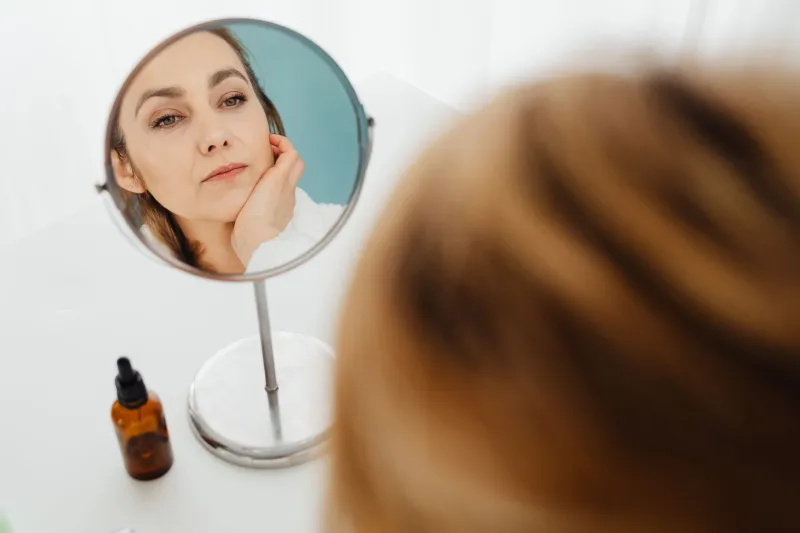
Dr. Renée Choudhary, a consumer psychologist who has consulted for several prestige beauty brands, describes what she calls the "attainment gap" — the distance between what a premium product is expected to deliver and what the consumer ultimately feels. "The issue isn't efficacy in a clinical sense," she explains. "Many of these products are genuinely well-formulated. The issue is that the purchase itself raises the emotional stakes. When you spend three hundred dollars on a serum, you're not just buying skincare — you're buying a version of yourself that you haven't yet become. And every morning you look in the mirror becomes a referendum on whether that investment has paid off."
This dynamic, she notes, is particularly pronounced among women between the ages of 35 and 55 in mid-to-high income brackets — precisely the demographic that luxury beauty brands court most aggressively. Research published in the Journal of Consumer Psychology supports this observation, finding that high-investment purchases in appearance-related categories correlate with increased self-monitoring behavior, a pattern associated with heightened social anxiety rather than improved self-image.
When Self-Investment Becomes Self-Surveillance
The mechanics of this phenomenon are worth examining closely. When a consumer commits financially to a premium skincare regimen, they tend to become more observant of their skin — not in a nurturing, curious way, but in an evaluative one. Every perceived imperfection is now measured against the implicit promise of the product. Pores that were once accepted become problems to be solved. Uneven tone that was previously unremarkable transforms into evidence of failure.
Dr. Marcus Webb, a behavioral economist at a Chicago-based research consultancy, frames this through the lens of what he terms "investment justification anxiety." "Human beings are wired to seek returns on what they spend," he says. "When the return is something as subjective and variable as skin appearance, the mind goes to work searching for proof. The problem is that the more you search, the more you find to worry about. It's a feedback loop that the luxury beauty industry rarely acknowledges, because acknowledging it would complicate the narrative."
This loop is further amplified by the digital environment in which most luxury beauty consumption now takes place. Social media platforms, which serve simultaneously as marketing channels and comparison engines, ensure that the bar for "radiant skin" is perpetually recalibrated upward. A consumer who might have felt satisfied with her complexion in 2005 is now measuring herself against filtered imagery, professional lighting, and the carefully constructed glow of influencers whose appearance is, in many cases, their literal occupation.
The Ritual Without the Resolution
It would be reductive to suggest that luxury skincare offers no psychological benefit whatsoever. Ritual, in and of itself, carries documented value. The deliberate act of caring for one's skin — the warmth of a cleansing balm, the sensory pleasure of a well-crafted moisturizer — can function as a form of mindful self-attention that genuinely supports emotional wellbeing. Several studies have linked structured personal care routines with reduced cortisol levels and improved mood stability.
The distinction, however, lies in the orientation of that ritual. When skincare is practiced as an expression of self-regard — a moment of attention given to the body without expectation of transformation — it tends to deliver on its emotional promise. When it is practiced as a corrective project, a series of interventions aimed at closing the gap between the current self and an idealized one, it tends to deepen dissatisfaction rather than resolve it.
"I see this constantly in my practice," says Dr. Choudhary. "Clients who have the most elaborate, expensive routines are often the ones who feel least at peace with their appearance. Meanwhile, someone with a simple, affordable regimen who genuinely enjoys her products often radiates a comfort in her own skin that no serum can manufacture."
What the Industry Owes Its Consumers
The luxury beauty industry operates on aspiration, and there is nothing inherently dishonest about that. Aspiration is a legitimate human drive, and premium products that deliver genuine results deserve recognition. The concern arises when marketing language — words like "transformative," "perfecting," and "flawless" — quietly repositions the consumer's existing appearance as a problem requiring correction.
Some brands are beginning to shift their approach. A handful of prestige skincare companies have introduced messaging that emphasizes skin health over skin perfection, framing their products as tools for maintenance and protection rather than instruments of radical change. Whether this represents a genuine philosophical evolution or a savvy response to growing consumer fatigue remains to be seen. But the direction is notable.
For consumers, the more immediate work may be introspective. Before adding another serum to an already substantial collection, it may be worth pausing to ask what, precisely, is being purchased. If the honest answer involves a version of oneself that has never quite materialized despite years of investment, that answer deserves consideration.
Toward a More Grounded Relationship With Luxury Beauty
None of this is an argument against premium skincare. At Glisten Beauty, we hold that well-formulated, thoughtfully sourced products represent a meaningful form of self-care, and that the pleasures of a considered beauty ritual are real and worth honoring. The question is not whether to invest, but how to invest — and with what expectations.
Radiance, in its truest form, is not a product outcome. It is a quality of presence, an ease in one's own skin that no price point can manufacture. The most luminous people are rarely those with the most expensive routines; they are those who have, in some essential way, made peace with the face they bring to the world each morning.
Luxury skincare, at its best, supports that peace. It does not create it. And understanding that distinction may be the most valuable thing a discerning consumer can carry into any beauty aisle.