When Self-Care Becomes Self-Scrutiny: The Hidden Anxiety Driving Luxury Skincare Obsession
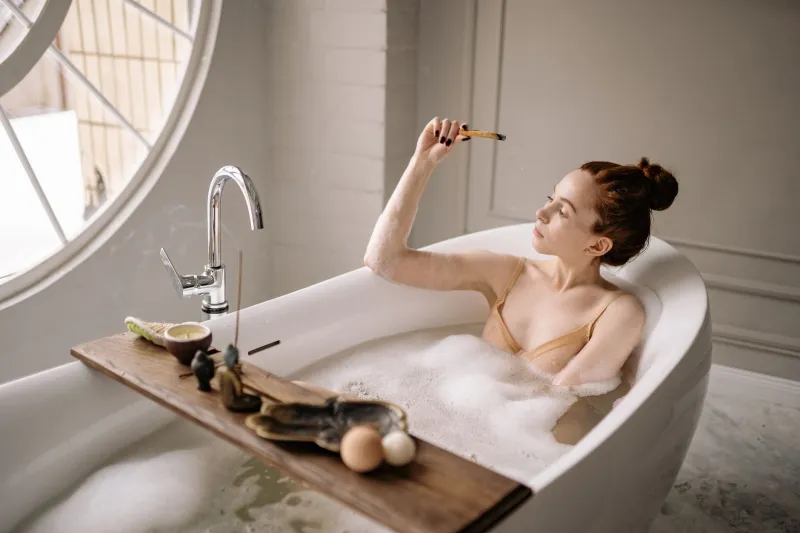
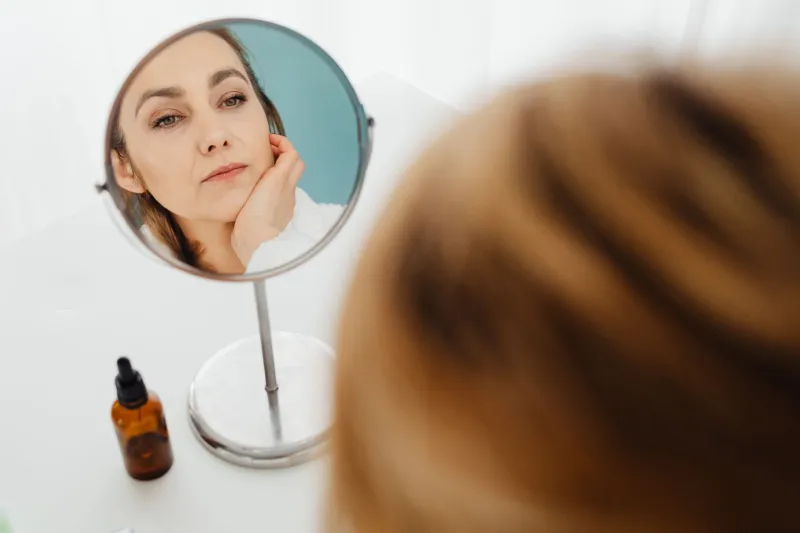
There is something quietly contradictory at the heart of the modern luxury skincare experience. The products are exquisite. The rituals are designed to feel restorative. The packaging alone can transform a bathroom shelf into something resembling a high-end apothecary. And yet, for a substantial and growing number of American consumers, the daily application of premium serums and radiance-boosting treatments has become less an act of nourishment and more an act of negotiation — a tense, ongoing assessment of whether the skin is performing adequately in return for the considerable investment being made.
This is not a fringe experience. Dermatologists across the country are reporting that patients arrive in their offices not because something is medically wrong, but because something feels emotionally wrong. The skin looks fine. The routine is sophisticated. The products are impeccable. And still, the anxiety persists.
The Marketing Promise and Its Psychological Cost
Luxury skincare marketing is, by its very nature, aspirational. It presents a vision of skin that glows with an almost otherworldly luminosity — poreless, even-toned, perpetually dewy. These images are compelling precisely because they feel just within reach. The implicit message is seductive: invest in the right products, follow the prescribed ritual with sufficient dedication, and transformation will follow.
The difficulty is that this promise creates what psychologists refer to as a reference point — an internal standard against which we continuously measure our actual results. When reality falls short of that standard, as it almost inevitably does, the gap does not simply register as disappointment. For many consumers, it registers as personal failure.
"I see patients who have built genuinely thoughtful, dermatologist-approved routines, and they are still deeply unhappy with their skin," says one board-certified dermatologist practicing in New York City. "When I ask them what they're hoping to achieve, they describe something that no living skin can actually look like. They've internalized an image that isn't real, and they're measuring themselves against it every single morning."
This dynamic is compounded by the sheer volume of information now available to the engaged skincare consumer. Ingredient databases, Reddit forums, YouTube tutorials, and influencer content have made it possible to spend hours each week researching formulations, debating layering sequences, and analyzing before-and-after photographs. What began as curiosity can gradually become vigilance — and vigilance, sustained over months and years, is exhausting.
The Loop That Luxury Creates
There is a particular irony embedded in the premium skincare experience. The more one invests — financially, temporally, emotionally — the more attention one directs toward the skin. And the more attention directed toward the skin, the more visible every variation becomes. A minor breakout that would have gone unnoticed a decade ago now registers as a crisis. A slight change in texture after introducing a new serum prompts hours of anxious research. The skin, once a relatively neutral aspect of daily life, becomes a project — one that is perpetually incomplete.
Wellness practitioners have begun describing this as a feedback loop: heightened investment leads to heightened attention, which leads to heightened awareness of imperfection, which leads to heightened investment in corrective products, and so on. The cycle is self-reinforcing, and the luxury skincare market — with its constant stream of new launches, reformulations, and trending actives — provides ample fuel to keep it running.
"We've created a culture in which having a skincare routine is no longer enough," observes a licensed therapist specializing in body image and wellness in Los Angeles. "You have to have the right routine, with the right products, in the right order, and if your skin doesn't respond the way the marketing suggested it would, there's an immediate impulse to blame yourself rather than the product or the expectation."
Redefining What a Luxury Ritual Is Actually For
The solution, most experts agree, is not to abandon premium skincare. The formulations are often genuinely sophisticated. The sensory experience of a well-crafted product has real value. And for many consumers, the ritual of morning and evening skincare represents one of the few moments of intentional pause in an otherwise relentless day.
The recalibration required is more subtle: a deliberate shift in the purpose the ritual is meant to serve.
When skincare is framed primarily as a performance — a means of achieving a specific visual outcome — it becomes subject to evaluation, comparison, and the inevitable anxiety that accompanies any high-stakes performance. When it is reframed as an act of care — a daily practice of attending to the body with intention and quality — the psychological stakes shift considerably.
This is not a novel concept. The Japanese practice of kansha, or grateful appreciation, and the Scandinavian emphasis on sensory pleasure over outcome are both frameworks that luxury beauty brands have begun to incorporate into their messaging, however inconsistently. The underlying principle is straightforward: the value of a ritual lies in its quality of presence, not exclusively in its measurable results.
A Framework for Confident Consumption
For consumers who recognize themselves in this pattern, dermatologists and wellness professionals suggest a practical reorientation built around a few core principles.
Define your intention before you define your routine. Before adding a new product or adjusting a regimen, ask not only what the product promises to do, but what you genuinely hope to feel. If the honest answer involves relief from anxiety rather than a specific skin concern, that is important information.
Establish a moratorium on comparison. The before-and-after photograph, the side-by-side influencer comparison, the forum thread cataloguing other people's results — these are, for the anxiety-prone consumer, rarely useful and frequently harmful. Your skin has its own timeline, its own texture, and its own definition of radiance.
Audit your routine for pleasure, not just efficacy. Remove products that feel like obligations. A luxury skincare ritual should contain at least a few items that you genuinely look forward to using — not because of what they promise to deliver, but because of how they feel in the moment of application.
Consult a professional before consulting the internet. A board-certified dermatologist can offer a grounded, medically informed perspective on what your skin actually needs, which is frequently far simpler than the elaborate routines that anxiety tends to construct.
Allow the skin to simply exist, occasionally. Not every morning requires a ten-step ritual. Not every day needs to be an opportunity for optimization. Some of the most luminous skin in the world belongs to people who have made peace with what they have.
Radiance as a State of Mind
Glisten Beauty has always held that true radiance is more than the sum of its active ingredients. It is the quality that emerges when a person feels genuinely well — rested, nourished, and at ease within their own skin. No serum, however brilliantly formulated, can manufacture that quality from the outside alone.
The luxury skincare industry at its finest offers tools for supporting the skin's natural vitality. But those tools are most effective when wielded with a steady hand and a quiet mind — when the ritual is an expression of self-regard rather than a response to self-doubt.
Reclaiming that distinction may be, for many consumers, the most transformative beauty decision they ever make.